
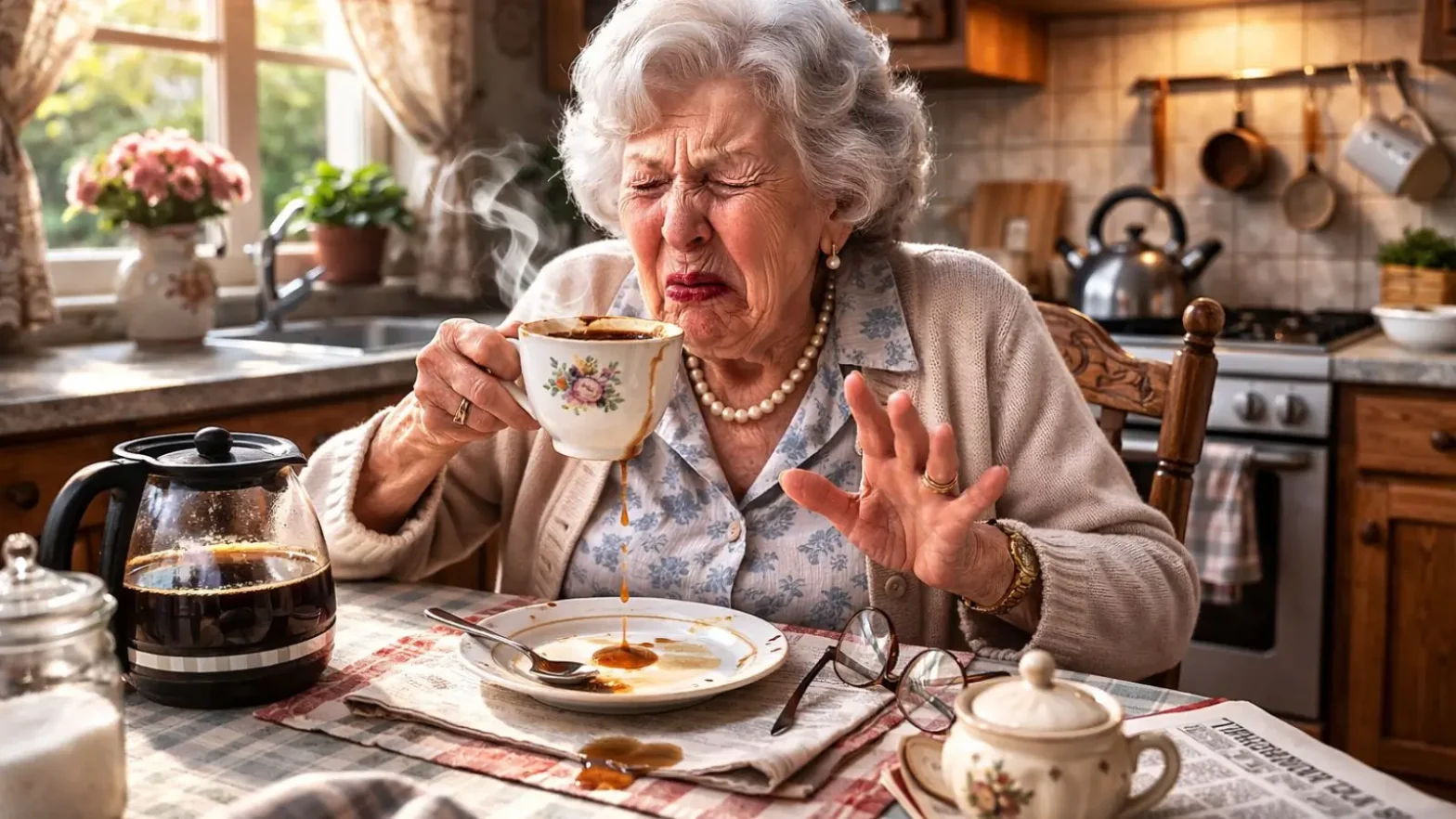
There’s nothing quite as disappointing as wrapping your hands around a warm mug, taking that first eager sip, and being hit with a harsh, bitter taste. The good news? You can learn how to make coffee less bitter by following a simple routine!
Bitterness in coffee is almost always fixable. Whether you’re troubleshooting a persistent problem or just had an off morning, these ten proven tips on how to make coffee less bitter will transform your daily brew.
But before we look at how to lessen the bitterness in your cup of coffee, thus, making it appealing to your throat, it is important to know why it is bitter in the first place.
Compare: How to Brew Specialty Coffee at Home
The Main Reasons Your Coffee Tastes Bitter

Nobody sets out to brew a bad cup of coffee. Yet bitterness is one of the most common complaints among coffee drinkers — from casual morning sippers to seasoned enthusiasts.
Understanding what causes it is the first step toward fixing it for good.
Here are the main reasons your bitter tastes bitter:
Over-Extraction
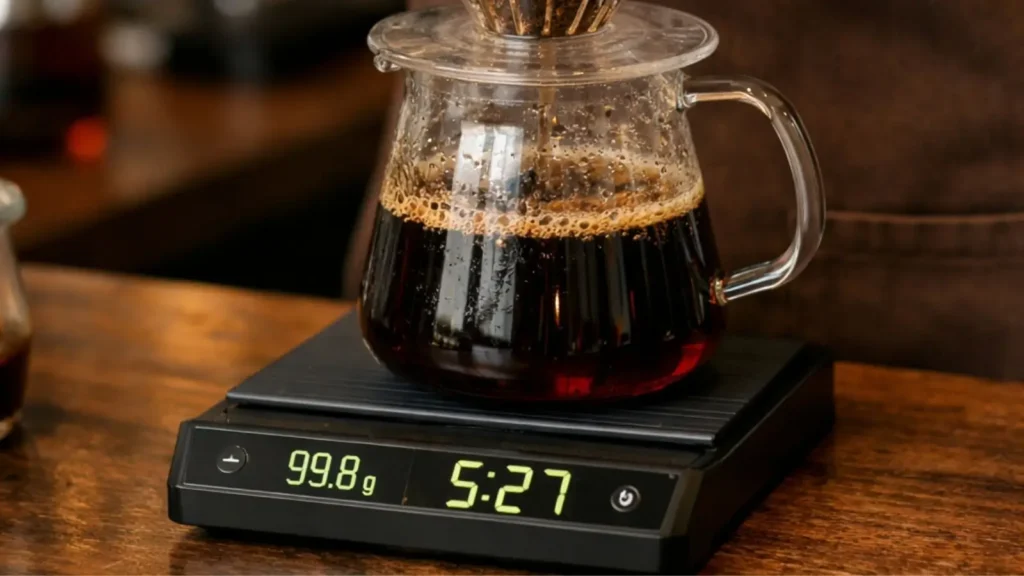
Of all the culprits behind a bitter cup, over-extraction is arguably the most common. It’s a brewing pitfall that catches even well-intentioned coffee lovers off guard, and once you understand it, you’ll never look at your brew time the same way again.
At first glance, brewing coffee seems refreshingly simple. Hot water meets freshly ground beans, and magic happens — or at least, that’s the idea. The reality, however, is a little more nuanced than that.
When you brew coffee, the water draws out a complex blend of acids, sugars, oils, and flavor compounds locked inside the grounds.
In the specialty coffee world, this process is known as “extraction.” To the rest of us, it’s just making coffee.
The goal is a perfect balance — enough extraction to capture all the good stuff, but not so much that things go sideways.
Push it too far, and you’ve got over-extraction: too many harsh organic compounds flooding your cup, turning what should be a rich, layered experience into something flat and punishingly bitter.
Think of it this way — even good things lose their charm when there’s too much of them.
A must-read: How to Make Bulletproof Coffee
Over-Roasted Beans
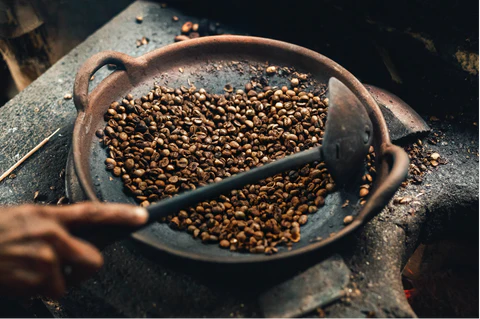
Your beans carry the story of how they were roasted — and sometimes, that story isn’t a pleasant one.
Over-roasted beans are a surprisingly widespread source of bitterness, and knowing what to look for on the bag can save your mornings.
Coffee roasting is a careful dance of heat, airflow, and rotation, transforming raw green beans into something beautiful.
Done right, it unlocks complexity and depth. Done wrong, it produces dark, over-roasted beans that trade nuance for sheer bitterness.
Sadly, heavy roasting is a trick sometimes used to mask the flaws of low-quality beans.
If you find dark roasts unpleasantly bitter, it’s worth knowing which labels to approach with caution — Dark Roast, French Roast, Italian Roast, and Espresso Roast are all worth a taste-test before committing.
Suggested for you: Coffee Beans and Roasts Explained
Poor Water Quality and Temperature
Most people obsess over their beans and brewing method while completely overlooking what makes up the majority of their cup – water.
Get this wrong, and even the finest beans in the world won’t save you.
Coffee has only two ingredients. If either one is off, the whole cup pays the price.
Water source matters far more than most people realize. If water is laced with harsh minerals or chemicals, it will quietly distort your coffee’s flavor profile.
Hard water, in particular, has a reputation for amplifying bitter notes that would otherwise stay in the background. Filtered or properly balanced water isn’t a luxury; it’s half your recipe.🦾
Temperature is equally critical. Pouring water straight off a rolling boil might seem efficient, but scalding water scorches the grounds before they can properly bloom.
The result?
That sharp, “burnt” bitterness that lingers long after the last sip — and sends coffee lovers reaching for something better.
Also see: How to Bloom Coffee Like a Pro
10 Proven Ways to Make Coffee Less Bitter
Now that you know what makes coffee bitter, it is time to fix the problem once and for all. But even in doing so, you need to give the process a sober approach, lest you worsen the state.
I am going to break down this approach into two: the things you can change and those you need to add.
Let’s start.
First, Look at What You Can Change
Sometimes the solution isn’t what you add to your cup — it’s what you change before the water ever hits the grounds. These first five brewing adjustments can make a world of difference.
1. Start with Your Beans
Not all beans are created equal, and stale ones are a silent saboteur. Coffee roasted more than three to four weeks ago begins losing its vibrancy, and with that comes an increase in bitter, flat-tasting notes.
For the freshest, most flavorful cup, aim to buy beans roasted within the last two weeks. Freshness isn’t a bonus — it’s a foundation.
2. Dial in Your Grind Size
Grind size has a direct and dramatic impact on how your coffee tastes. A grind that’s too fine causes over-extraction, pulling excessive bitter compounds into your cup.
Go too coarse, and you risk under-extraction, which produces a sour, weak brew.
Finding that sweet middle ground for your specific brewing method is one of the most effective ways to make coffee less bitter from the very start.
3. Mind Your Brew Time
Just like grind size, brew time controls how much extraction takes place. If bitterness is a recurring issue, try shortening your brew time incrementally until you land on a cup that tastes balanced and smooth.
Small adjustments here can produce surprisingly significant results without changing anything else about your routine.
4. Nail Your Coffee-to-Water Ratio
Too much water dilutes everything good about your coffee, while too little creates an overpowering, concentrated brew. A reliable starting point is the golden ratio — one part coffee to fifteen parts water.
From there, experiment freely until your cup hits that perfect sweet spot of strength and smoothness.
You might also like: Cold Brew Coffee Concentrate: What is It and How to Make It
5. Check Your Water Quality
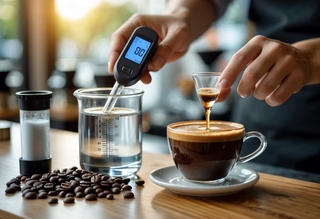
Water is half of your recipe, yet it’s the ingredient most people never think twice about.
Hard water packed with minerals can aggressively amplify bitter notes that would otherwise be subtle.
Using filtered water with a balanced mineral profile doesn’t just improve taste — it gives your beans the clean canvas they deserve to shine.
Then, Consider What You Can Add
Sometimes the quickest path to a less bitter cup is a simple, well-chosen addition. These latter five options work with your brew rather than against it.
6. Add a Fat
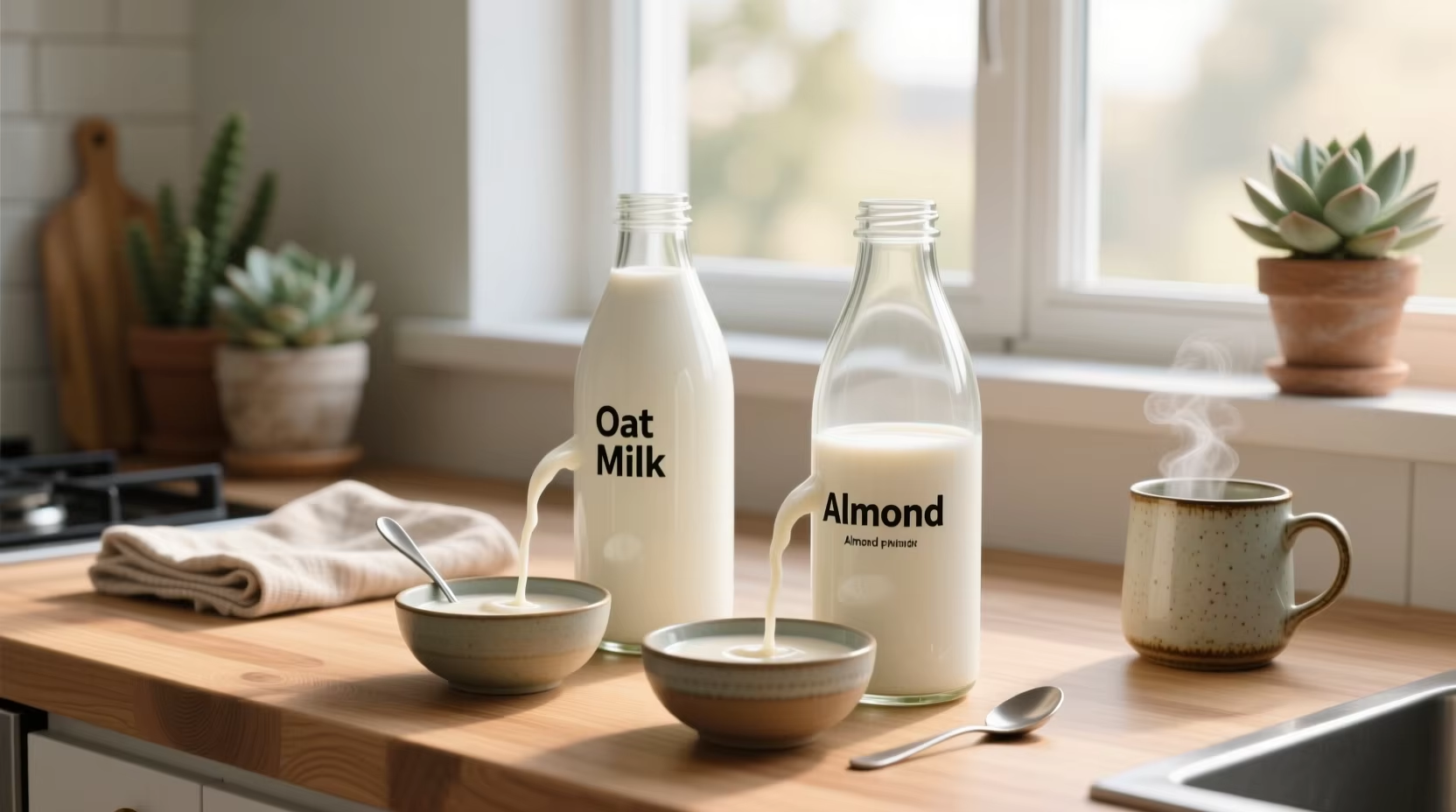
Fat is a natural buffer against bitterness. A splash of whole milk, oat milk, almond milk, cream, or even a small knob of butter softens the sharp edges of a bitter brew and rounds out the overall flavor beautifully.
This is one of the most versatile fixes — experiment until you find the combination your taste buds love most.
Related reads:
7. Reach for the Salt Shaker
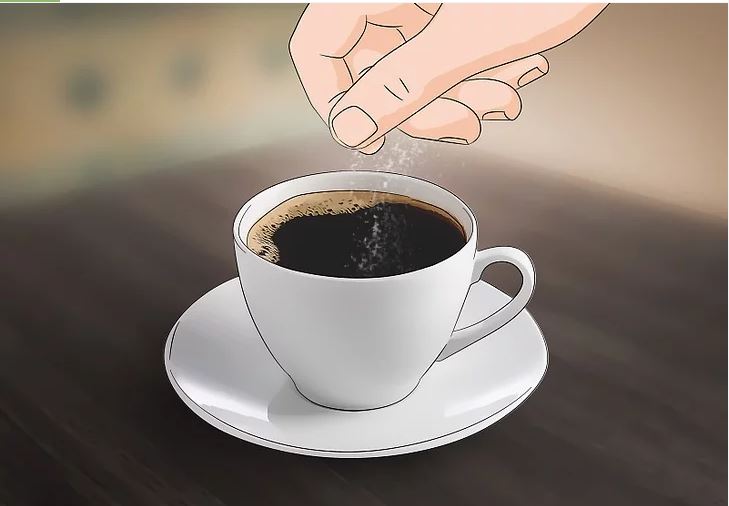
Much as it may sound counterintuitive, a small pinch of salt is remarkably effective at neutralizing bitterness not only in coffee but also in other drinks.
Research actually suggests that salt outperforms sugar when it comes to suppressing bitter compounds — a little-known trick that also works wonders on coffee that’s tasting stale or flat.
8. Sweeten it Up
Sugar remains one of the most popular and straightforward ways to make coffee less bitter.
Adding sugar doesn’t eliminate the bitterness so much as redirect your palate toward sweetness, making the overall experience far more pleasant. Start small and adjust to taste.
9. Try a Dash of Cinnamon
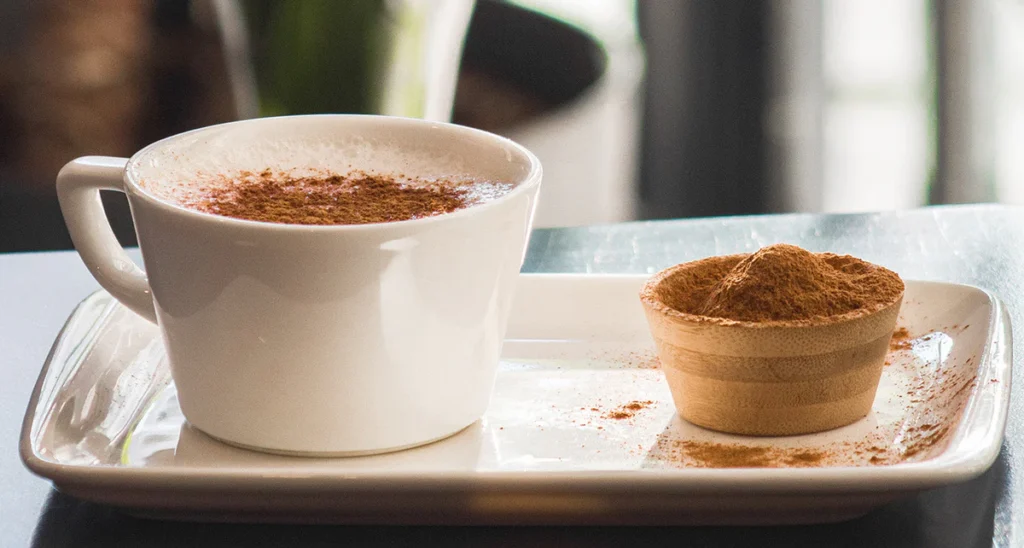
Cinnamon has a remarkable ability to psychologically soften bitterness.
Because your brain associates it with warmth and sweetness, a light dusting in your grounds or directly in your cup tricks your taste buds into perceiving less bitterness than is actually there.
It also adds a gentle, aromatic complexity that pairs beautifully with most roast profiles.
10. Add a Touch of Citrus
A thin strip of lemon or orange rind dropped into your brew introduces just enough acidity to counterbalance bitter notes without dramatically altering the flavor.
If you’ve ever been served coffee alongside a citrus wedge at a café, now you know exactly why — it’s a time-honored trick that genuinely works. 🙈
Your Brewing Method Matters More Than You Think
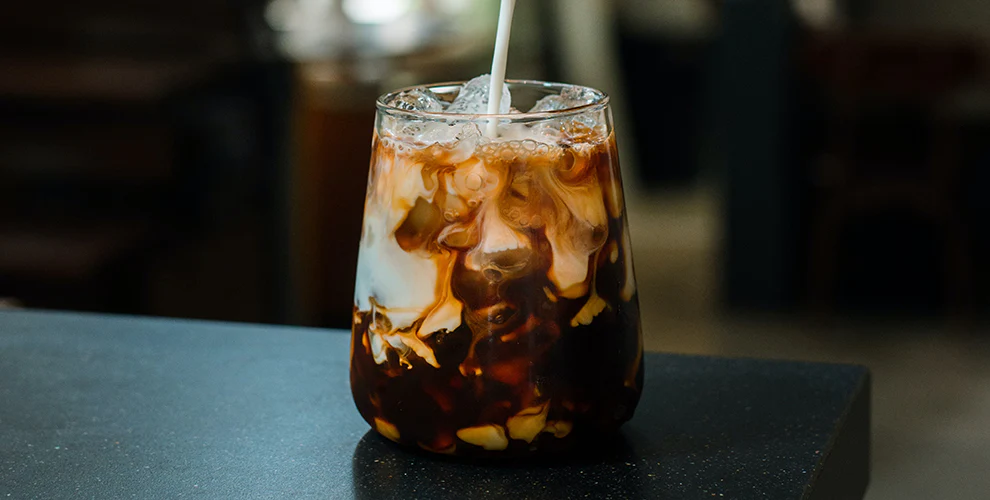
How you make coffee less bitter also depends heavily on which brewing method you use, because not all methods give you the same level of control.
The French Press and Pour Over methods offer the most flexibility, allowing you to fine-tune water temperature, steep time, grind size, and ratio simultaneously.
If you’re getting consistent bitterness with either method, start by adjusting one variable at a time rather than changing everything at once.
Pour overs in particular are highly sensitive to grind size and pouring technique, so begin there.
Cold brew is arguably the most forgiving method of all.
Brewing with cold water instead of hot water dramatically reduces the extraction of bitter compounds, making it nearly impossible to produce a bitter cup — unless you over-steep beyond the 24-hour mark.
For those who are especially sensitive to bitterness, cold brew is a revelation.
Automatic brewers like drip coffee makers and Keurig machines offer limited control over variables.
With these, your best levers are the quality of beans you select and the water-to-coffee ratio. Focus on those two factors, and you’ll already be ahead of most.
Compare: 20 Coffee Brewing Methods Compared
What People Also Ask on How to Make Coffee Less Bitter
Q: Why does my coffee taste bitter every time I brew it?
A: Bitter coffee is almost always the result of over-extraction — your water is spending too long in contact with the grounds, pulling out harsh compounds that overwhelm the cup. The most common triggers are a grind that’s too fine, brew time that’s too long, or water that’s too hot. Identifying which variable is off is the first step toward a consistently smooth cup.
Q: Does adding salt really make coffee less bitter?
A: It sounds unlikely, but yes — a small pinch of salt added to your grounds before brewing is surprisingly effective at neutralizing bitterness. Research even suggests that salt is better at suppressing bitter compounds than sugar. It won’t make your coffee taste salty; it simply softens the harsh edges and brings out a more rounded, balanced flavor.
Q: What is the best water temperature for brewing coffee?
A: The sweet spot for brewing coffee is between 195°F and 205°F. Water poured straight off a rolling boil at 212°F is too hot — it scalds the grounds and forces bitter compounds into your cup. If you don’t have a thermometer, simply let your boiled water sit for 30 to 60 seconds before brewing, and you’ll be well within the ideal range.
Q: Does grind size affect how bitter coffee tastes?
A: Absolutely. A grind that’s too fine increases the surface area exposed to water, causing rapid over-extraction and bitterness. Switching to a slightly coarser grind slows the extraction process down, giving you a smoother, more balanced cup without changing anything else about your routine.
Q: Is cold brew less bitter than hot coffee?
A: Yes — cold brew is widely regarded as the least bitter brewing method available. Because it uses cold water instead of hot, the extraction of bitter compounds is dramatically reduced, producing a naturally smooth and mellow cup. Unless you over-steep beyond 24 hours, it’s nearly impossible to make a bitter cold brew.
The Bottom Line
Learning how to make coffee less bitter isn’t about overhauling your entire routine — it’s about identifying the right variable and making one smart adjustment at a time.
Whether it’s freshening up your beans, tweaking your grind, or adding a pinch of salt, each small change brings you closer to the cup you’ve always wanted.
Great coffee isn’t reserved for cafés — with the right knowledge, it starts right in your own kitchen.
Related posts:
Hario V60 Dripper Filters: What They Are and How to Use Them Properly
Saturday March 21, 2026How to Grind Coffee Beans: A Complete Beginner-to-Pro Guide
Tuesday January 6, 2026How to Brew Coffee Without a Coffee Maker: 4 Methods to Make Coffee Anywhere
Sunday January 18, 2026Organic Cold Brew Coffee: Why It's Better and How to Make It at Home
Saturday June 27, 2026Coffee to Water Ratio: The Secret to Brewing a Perfect Cup
Sunday May 17, 2026How to Make the Best Coffee in a Percolator
Tuesday January 20, 2026How Much Coffee Grounds Per Cup of Water?
Monday May 18, 2026How Many Scoops of Coffee Per Cup? The Perfect Coffee to Water Ratio
Wednesday May 13, 2026
Hi,
I’m Wycléf NY, a certified barista with 6 years of experience (as of December 2025).
I started this website to share my coffee preparation insights with aspiring coffee enthusiasts and interact with fellow baristas.
Let’s catch up over a cup of iced Coffénzo coffee or shoot me a quick short message text (sms) at ny@coffenzo.com