
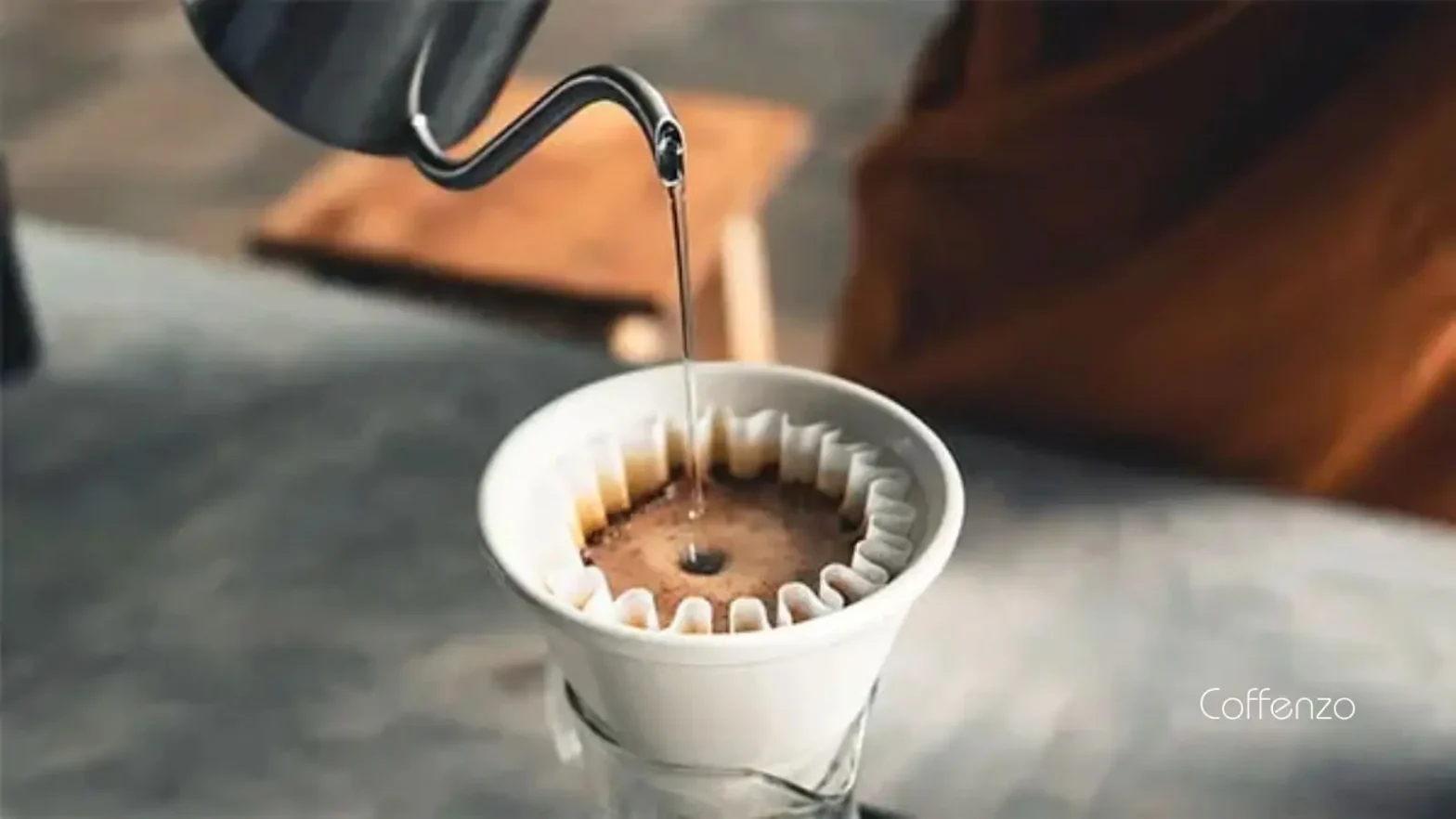
You’re about to learn how to bloom coffee the professional way. If you want to brew coffee that tastes cleaner, sweeter, and more balanced, mastering how to bloom coffee is your first step. I’m going to walk you through the exact timing, ratios, and techniques I use behind the bar every single day.
Don’t have much time to read through? Get the answer right away.
How to Bloom Coffee: The Basic Technique
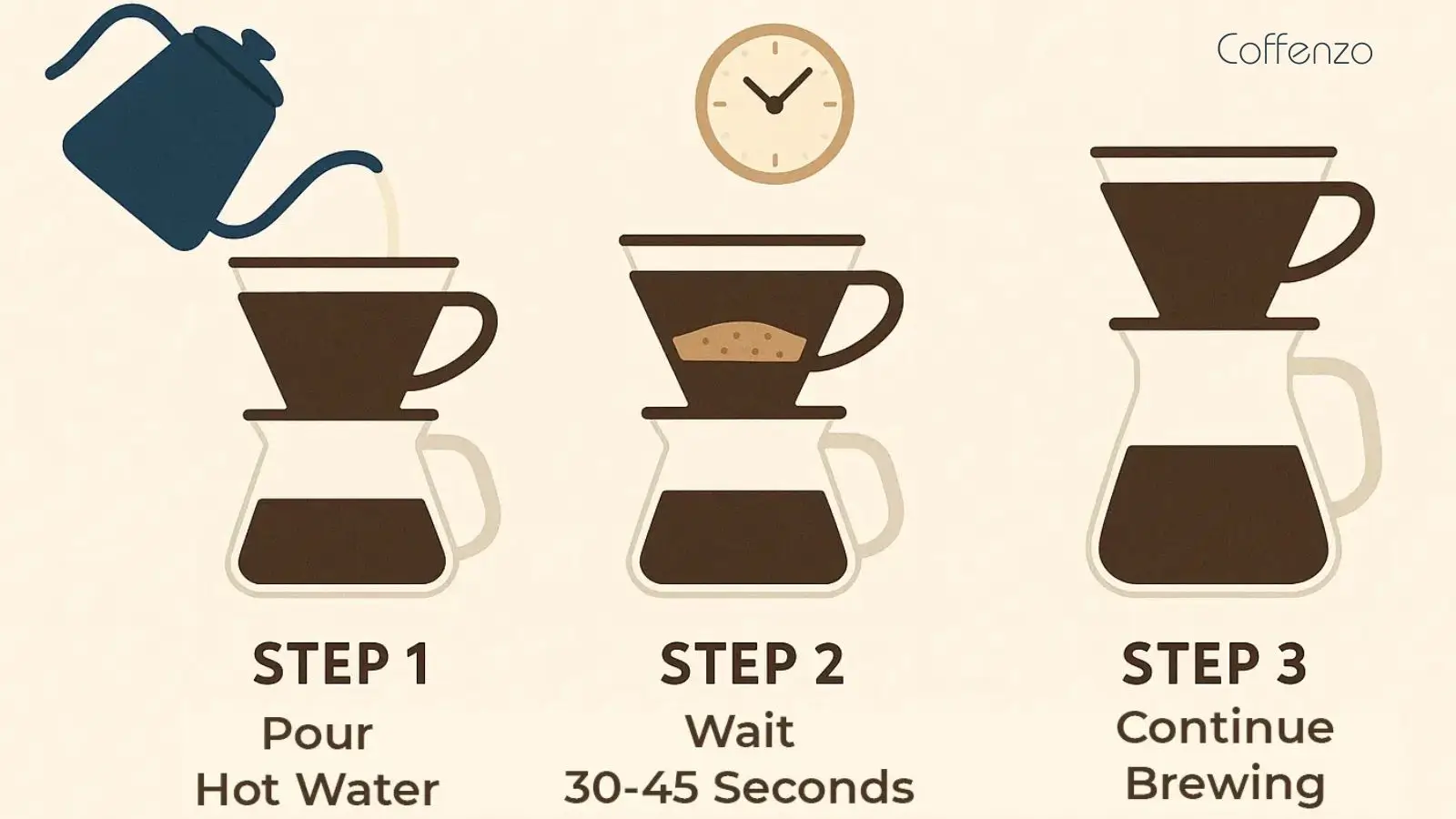
Here’s how to bloom coffee step by step.
- Start by placing your filter in your dripper and rinsing it with hot water. Remember to pour out the water. DO NOT use the water because the purpose was to wash the filter.
- Add your ground coffee and give it a gentle shake to level the bed.
- Now pour just enough hot water to saturate all the grounds—usually 2-3 times the weight of your coffee.
- Pour in a slow, circular motion starting from the center and working outward. Make sure every ground gets wet.
- You’ll see the coffee puff up and release gas. Let it sit and do its thing. Don’t rush this moment—it’s where the magic starts.
Now let’s go back to the basics.
What is Blooming Coffee?
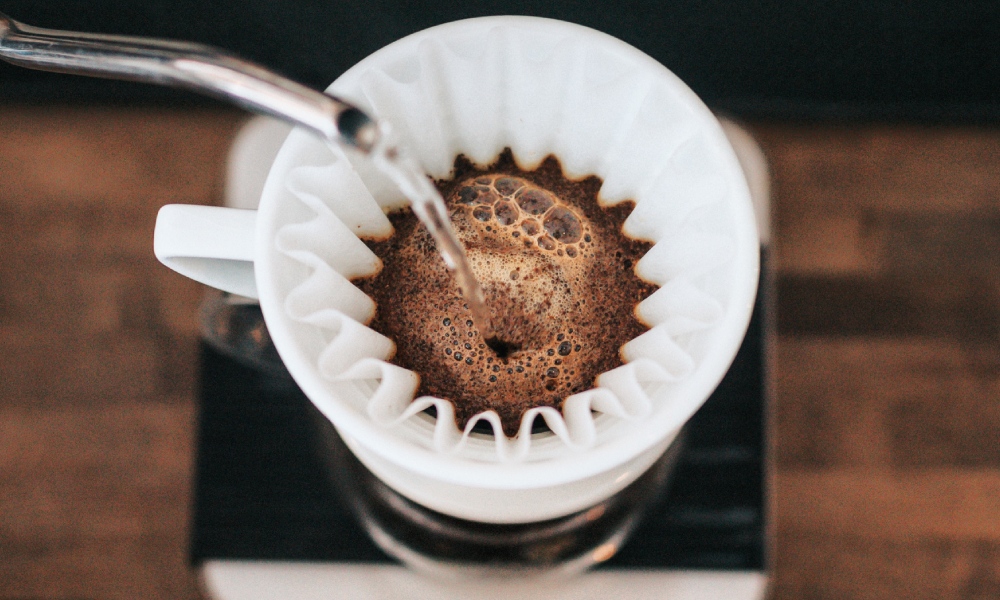
Blooming is the process of pre-wetting your coffee grounds before you start your full brew. When you pour hot water over fresh coffee, it releases trapped carbon dioxide gas. You’ll see the grounds bubble up and expand—that’s the bloom happening right in front of you.
This step is crucial because CO2 creates a barrier that blocks water from extracting all those delicious flavors from your coffee. When you bloom first, you’re degassing the grounds. You’re making room for even extraction during the rest of your brew.
Fresh coffee has more CO2, so you’ll see a bigger, more dramatic bloom. Older coffee? The bloom will be flatter and less active.
Related topics:
- How to Brew Coffee Without a Coffee Maker
- How to Make Concentrated Cold Brew Coffee
- 20 Coffee Brewing Methods Compared
Why You Need to Bloom Your Coffee
Here’s what happens when you skip the bloom: your water hits those gassy grounds and can’t penetrate evenly. You end up with sour, under-extracted notes mixed with bitter, over-extracted flavors. It’s a mess.
On the flipside, when you bloom properly, you’re setting yourself up for success. The water flows through the coffee bed uniformly. You get better clarity, smoother body, and those sweet, complex flavors you paid good money for.
Think of blooming as opening the door for extraction. Without it, you’re just knocking and hoping something good happens.
How Long to Bloom Coffee?
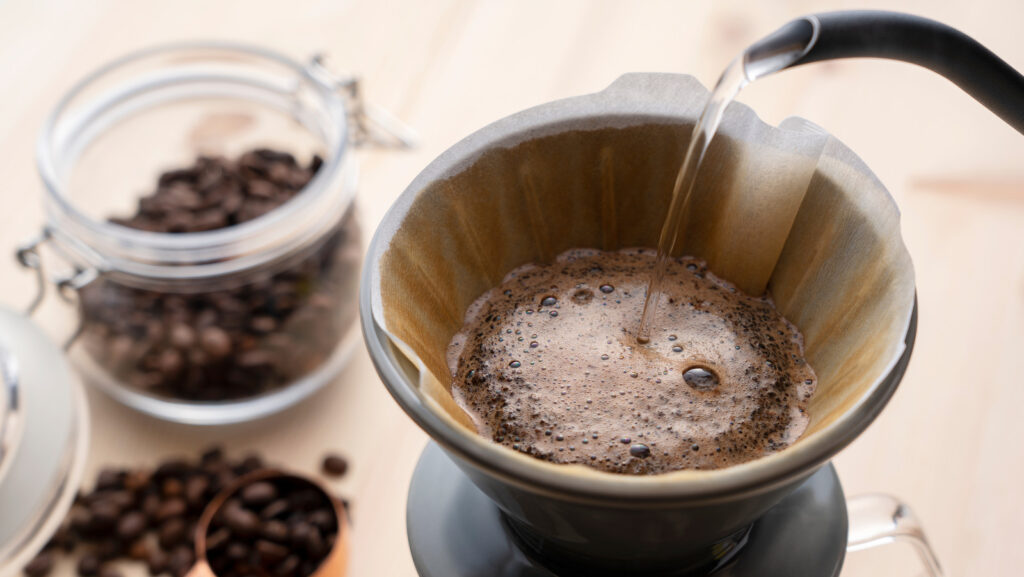
How long to let coffee bloom depends on how fresh your beans are. For coffee roasted within the last two weeks, a 30-45 second bloom is recommended. You need that extra time to let all that CO2 escape.
If your coffee is older (2-4 weeks past roast), blooming should not exceed 30 seconds. There’s less gas to release, so you don’t need as long.
What if your coffee is older than a month? In this case, you might only see a minimal bloom, so 20-30 seconds is plenty.
Here’s my rule: watch the bubbles. When the bubbling slows down and the grounds start to settle, you’re ready to continue brewing.
The Perfect Bloom Ratio
You want to use 2-3 times the weight of your coffee in water for the bloom. If you’re brewing 20 grams of coffee, pour 40-60 grams of water during the bloom phase. I personally stick with a 1:2.5 ratio for most brews.
This gives you enough water to fully saturate the grounds without adding too much liquid too early. You’re not trying to extract flavor yet—you’re just degassing and prepping the coffee bed.
Use a scale if you can. Eyeballing it works in a pinch, but precision gets you consistency.
Water Temperature for Blooming
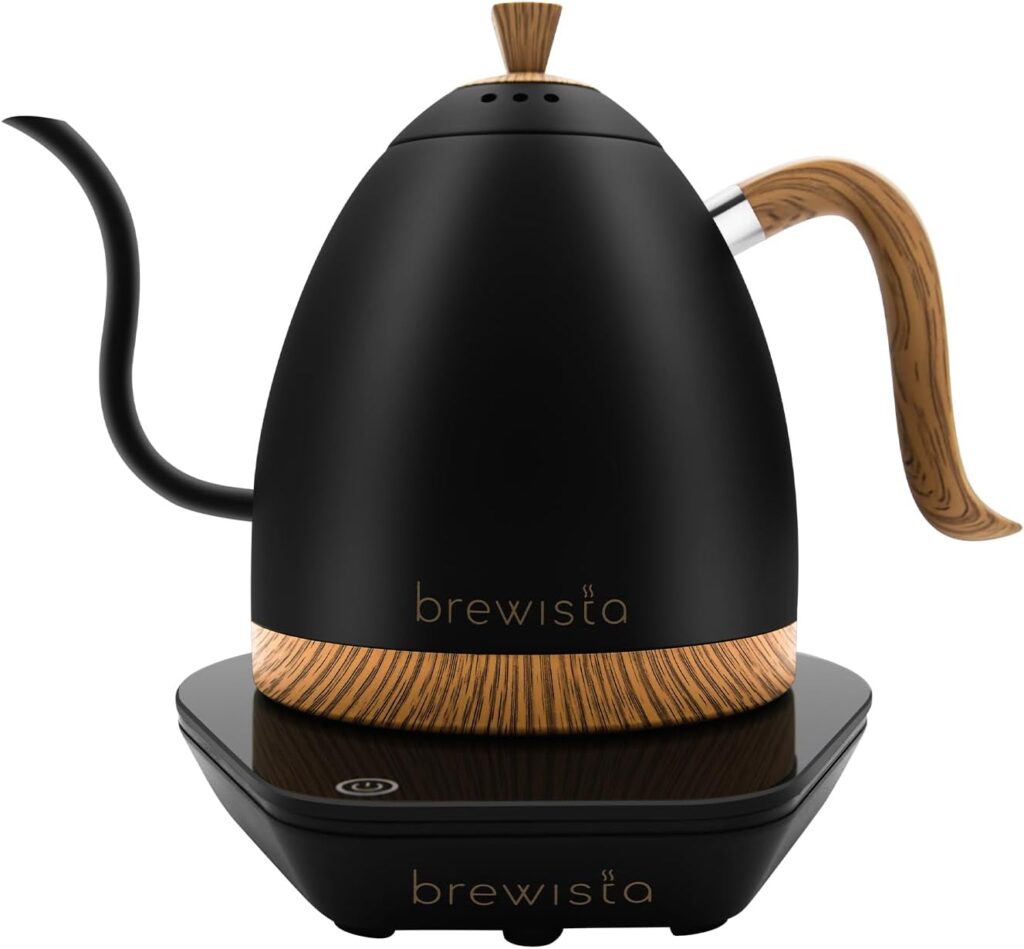

Your bloom water should be between 195-205°F (90-96°C). This is the same temperature you’ll use for the rest of your brew. Don’t overthink this part—if your water is cold, you won’t degas efficiently or extract properly.
I boil my water and let it sit for about 30 seconds before I start blooming. That usually gets me right into the sweet spot. If you have a temperature-controlled kettle, even better—set it to 200°F and forget about it.
Some baristas prefer letting the electric kettle (pictured above) sit on the heater all the time during coffee brewing to maintain optimum boiling temperature.
Hot water releases CO2 faster and preps your coffee for optimal extraction. As for cold or lukewarm water, the truth is you’re simply wasting your time.
Blooming for Different Brew Methods
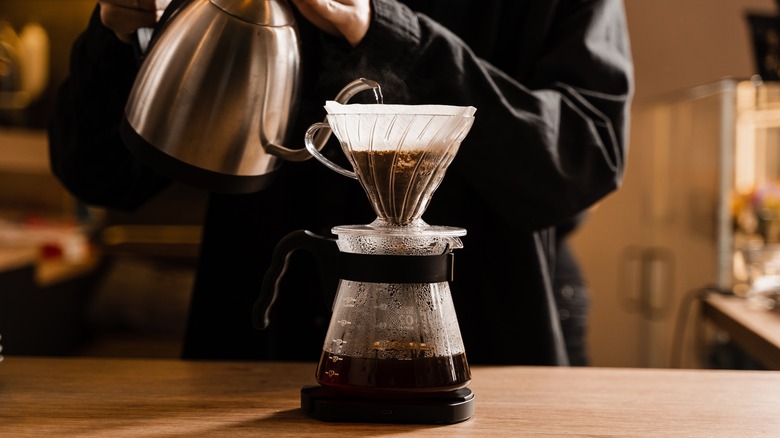
Different brewing methods need slightly different blooming approaches. The core principle remains the same, but you’ll adjust your technique based on the material you’re using.
Here is how to bloom for each popular method.
Pour-Over (V60, Chemex, Kalita)
Pour-over is where blooming shines brightest. Use your 1:2.5 ratio, pour gently in circles, and wait 30-45 seconds. You’ll notice the difference immediately when you taste the final cup.
The bloom sets up an even coffee bed. Your subsequent pours will flow through uniformly, giving you that clean, vibrant cup pour-over is known for.
French Press
Yes, you should bloom your French press coffee too. Add your bloom water, stir gently to make sure all grounds are saturated, then wait 30 seconds before adding the rest of your water. You’ll get a cleaner, less muddy cup.
Drip Coffee Maker
Most automatic drip machines don’t have a bloom function, but some high-end models do. If yours doesn’t, you can manually bloom by adding hot water to the grounds, waiting 30 seconds, then starting the machine. It’s extra work, but it pays off.
Common Mistakes to Avoid When Blooming Coffee
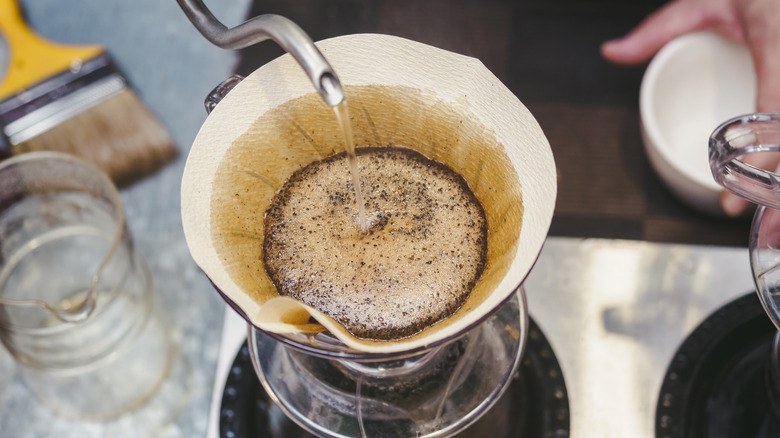
Understanding the bloom process means nothing if your technique is inconsistent. The gap between a good cup and a great one often comes down to these easily overlooked errors.
Bypassing the bloom step altogether
Many brewers treat the bloom as optional — it isn’t. When you skip it, trapped CO₂ inside fresh grounds actively pushes back against incoming water, preventing full saturation.
The result is a patchy extraction that shows up as sharpness, sourness, or a flat, hollow finish in the cup. If your beans are high quality but the brew still disappoints, this is almost always where the problem starts.
Cutting the bloom short
The 25–45 second window exists for a reason. CO₂ doesn’t release all at once — it escapes gradually as hot water activates the grounds.
If you rush into your main pour too early, residual gas keeps interfering with water absorption throughout the entire brew cycle, leading to inconsistent extraction from top to bottom of the coffee bed.
Under-watering during the bloom
A proper bloom requires enough water to fully wet the entire ground bed — typically twice the weight of your coffee. Using too few leaves dry pockets that never degas properly.
Those dry grounds then absorb your main pour unevenly, pulling weak or bitter flavors depending on which zones over- or under-extract.
Pouring with too much force
The bloom phase is delicate. A high, heavy pour can scatter grounds, collapse the bed structure, and carve uneven paths through the coffee before extraction has even begun.
Keep your pour close to the surface, slow, and controlled — let the water settle into the grounds rather than blast through them.
Brewing with water that’s too cold
Temperature plays a direct role in how effectively CO₂ is drawn out. Water below 195°F struggles to trigger a vigorous bloom, meaning gas stays trapped in the grounds and carries into your brew.
For most coffees, a range of 195–205°F gives you the best balance of degassing and extraction.
Ignoring what the bloom is telling you
The bubbling and doming you see during bloom isn’t just visual noise — it’s real-time feedback. A vigorous, fast bloom signals very fresh coffee.
A weak or slow bloom may indicate older beans that have already lost much of their CO₂. Paying attention to this helps you adjust your brew time and grind size accordingly.
Starting with pre-ground coffee
Ground coffee begins losing CO₂ within minutes of being milled. By the time you brew, most of that gas is already gone — which means there’s very little to bloom in the first place.
Grinding fresh, immediately before brewing, is the single most effective way to ensure your bloom actually does its job.
POINT TO NOTE: The bloom isn’t a warmup ritual or a barista habit worth skipping at home. It’s the step that sets the conditions for everything that follows — and getting it right consistently is what separates a drinkable cup from a genuinely memorable one.
How Grind Size Affects Your Bloom
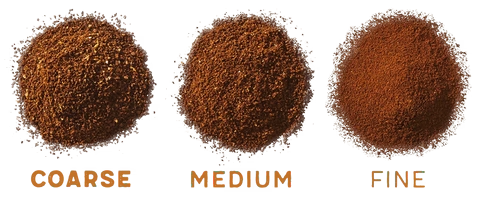
Finer grinds create more surface area and release CO2 faster. You might see a more vigorous bloom, but you can stick with the standard 30-45 second timing. Just make sure you’re saturating every particle.
Coarser grinds bloom more slowly. You might need to add a few extra seconds to ensure complete degassing. Watch the bubbles—they’ll tell you when it’s done.
Inconsistent grinds (from a blade grinder) will bloom unevenly. Invest in a burr grinder if you’re serious about better coffee.
Blooming Fresh vs. Stale Coffee
Fresh coffee (under 2 weeks from roast) will bloom dramatically. You’ll see big bubbles, expansion, and lots of CO2 release. This is what you want. Give it the full 45 seconds.
Coffee that’s 2-4 weeks old will still bloom, just less aggressively. Stick with 30 seconds, and you’ll be good.
Stale coffee (over a month old) barely blooms at all. You can still do it for 20-30 seconds, but honestly, the coffee quality has already dropped. Use fresh beans whenever possible.
Read: How to Make the Best Coffee in a Percolator
Pro Tips from Behind the Bar for Excellent Blooming
I always smell the bloom. That first release of aroma tells me a lot about the coffee—its freshness, roast level, and what flavors to expect. Train your nose and you’ll become a better brewer.
Use a gooseneck kettle for controlled, precise pouring. You want to wet the grounds evenly, and a gooseneck gives you that control.
Keep your bloom consistent every time you brew. Same ratio, same timing, same technique. Consistency is what separates okay coffee from great coffee.
Frequently Asked Questions (FAQs)
Q: How do you bloom coffee for pour over?
A: To bloom coffee for pour over, use 2-3 times the weight of your coffee grounds in hot water (195-205°F). Pour gently in circular motions to saturate all grounds evenly, then wait 30-45 seconds before continuing your brew.
Q: Can you bloom coffee without a scale?
A: Yes, you can bloom coffee without a scale by pouring just enough water to fully wet all the grounds—usually about 2-3 tablespoons of water per tablespoon of coffee. Watch for the bubbling action and wait 30-45 seconds before adding more water.
Q: How do you bloom coffee in a French press?
A: To bloom coffee in a French press, add your bloom water (2-3 times the coffee weight), stir gently to saturate all grounds, and wait 30 seconds. Then add the remaining brewing water and continue as usual.
Q: Does blooming coffee work with old beans?
A: Yes, you can still bloom coffee with old beans, but the bloom will be less dramatic since older coffee has released most of its CO2. Use the same 2-3x water ratio but reduce bloom time to 20-30 seconds since there’s less gas to release.
Q: How do you bloom coffee in an automatic drip machine?
A: To bloom coffee in an automatic drip machine, manually add hot water to just saturate the grounds in the filter basket, wait 30 seconds, then start the machine’s brew cycle. Some high-end machines have built-in bloom functions that do this automatically.
The Bottom Line
Now you know exactly how to bloom coffee like a professional barista. You’ve got the timing down (30-45 seconds for fresh beans), the ratio locked in (2-3x your coffee weight in water), and the technique dialed in (gentle, circular pour to saturate all grounds).
How long to let coffee bloom? Long enough to see the bubbles slow down and the grounds settle—usually 30-45 seconds depending on freshness.
Start blooming your coffee tomorrow morning. You’ll taste the difference in your very first sip, and you’ll never go back to skipping this crucial step.
Related posts:
Hario V60 Dripper Filters: What They Are and How to Use Them Properly
Saturday March 21, 2026Organic vs Non Organic Coffee: Similarities and Striking Differences
Wednesday January 28, 2026How to Brew Specialty Coffee at Home: Your Complete Guide
Saturday February 14, 2026Best Liquid Descaler for Coffee Machines: Top Picks for 2026
Monday January 19, 2026The Best Way to Store Whole Coffee Beans
Sunday January 18, 2026How to Make the Best Coffee in a Percolator
Tuesday January 20, 2026Blonde Espresso: Caffeine Content and Why You Should Try It
Tuesday April 14, 2026How to Make a Spanish Latte (Step-by-Step Guide)
Wednesday January 7, 2026Macchiato vs Cortado: Which Bold Little Espresso Drink Actually Wins?
Tuesday March 17, 2026
Hi,
I’m Wycléf NY, a certified barista with 6 years of experience (as of December 2025).
I started this website to share my coffee preparation insights with aspiring coffee enthusiasts and interact with fellow baristas.
Let’s catch up over a cup of iced Coffénzo coffee or shoot me a quick short message text (sms) at ny@coffenzo.com