
If you have spent any time in the specialty coffee world, you have probably heard the name Hario. The Japanese brand has earned a near-legendary status among coffee enthusiasts, baristas, and home brewers alike — and at the center of that reputation sits the V60. More specifically, it is the Hario V60 dripper filters that make this brewing system so uniquely capable of producing a clean, nuanced, and incredibly flavorful cup.
Whether you are brand new to pour-over coffee or a seasoned home barista looking to sharpen your technique, understanding the role and proper use of these filters is one of the most important steps you can take toward brewing mastery.
In this guide, we break down everything you need to know — from the science behind the filter design, to step-by-step brewing instructions, to common mistakes and how to fix them.
By the end, you will have all the knowledge you need to get the absolute best out of your brewer.
What Are Hario V60 Dripper Filters?
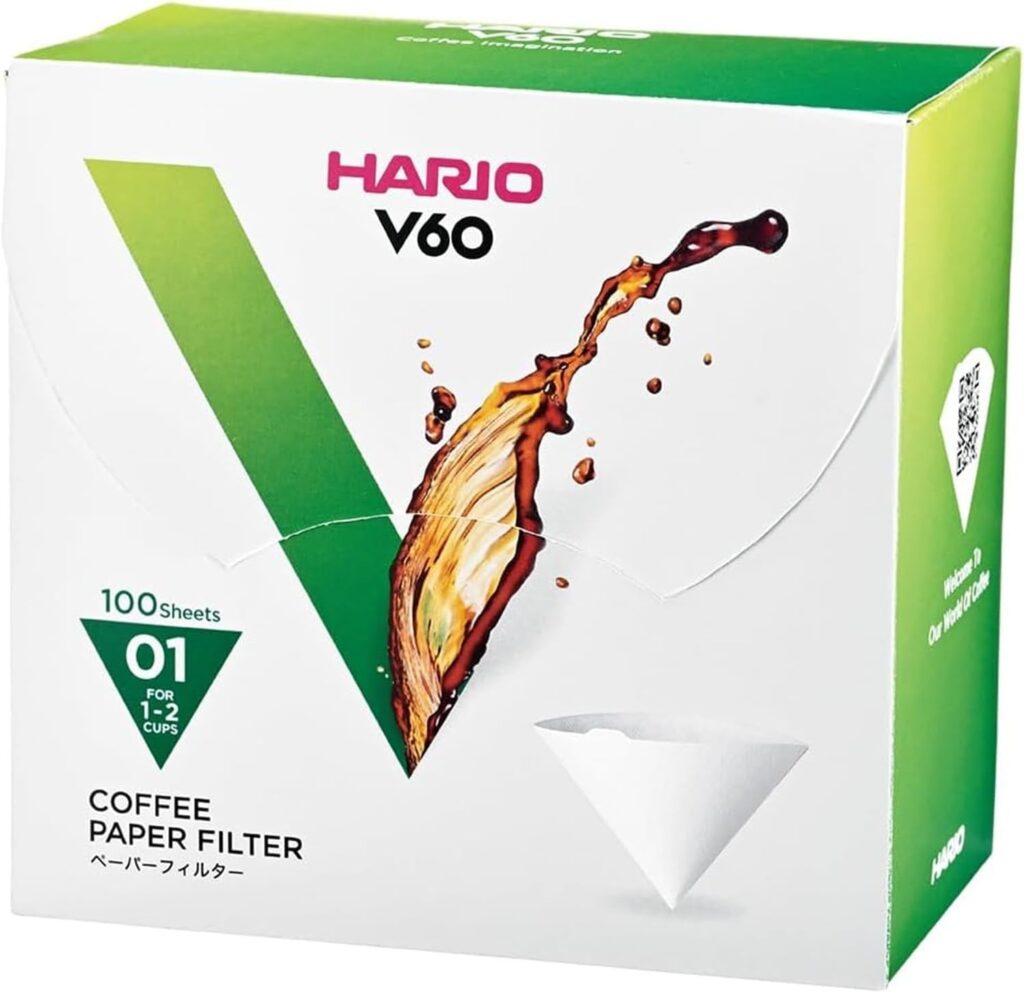

At their most basic level, Hario V60 dripper filters are cone-shaped paper filters specifically designed to fit inside the Hario V60 pour-over dripper.
However, calling them “just paper” would be a significant understatement. These filters are precision-engineered to work in harmony with the V60’s distinctive cone shape, spiral ridges, and single large drainage hole — all of which are designed to give the brewer complete control over extraction speed and flavor development.
Hario, which translates to “King of Glass” in Japanese, has been crafting laboratory-grade glassware and coffee equipment since 1921. Their approach to filter design reflects decades of material research and brewing science.
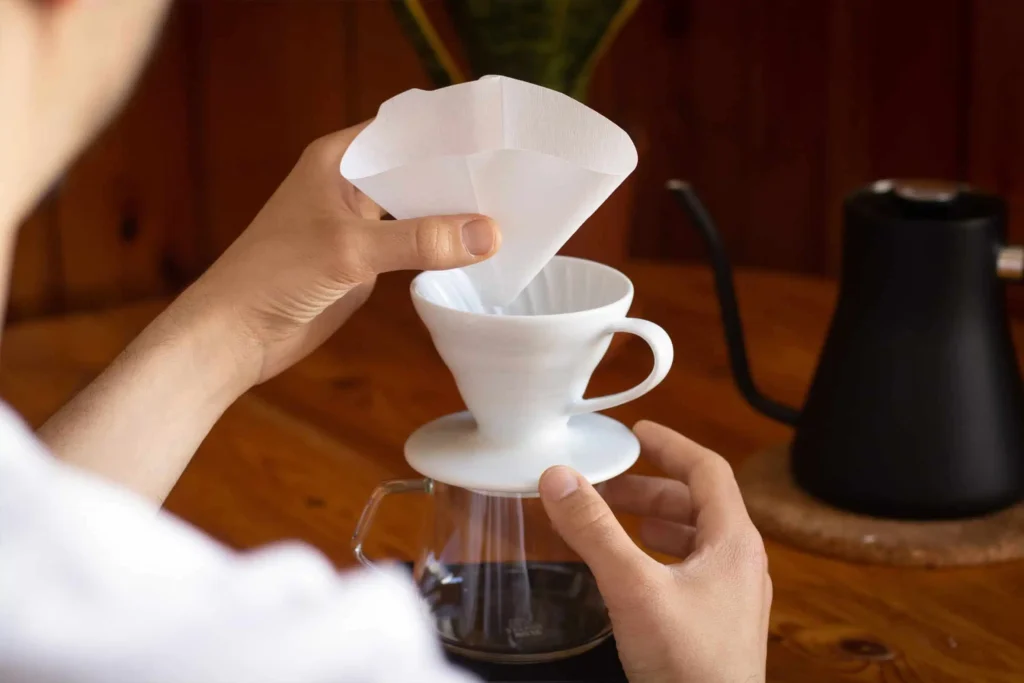
Hario filters (pictured above) are made from high-quality, oxygen-bleached or natural unbleached paper that is thin enough to allow coffee oils to pass through subtly, yet dense enough to capture fine grounds and undesirable sediment. The result is a cup that is clear, clean, and full of complexity.
The filters come in several sizes — most commonly Size 01, Size 02, and Size 03 — corresponding to the different V60 dripper sizes available.
Size 01 is ideal for one to two cups, Size 02 (the most popular) handles two to four cups comfortably, and Size 03 suits larger batch brewing.
Each filter is pre-folded into a cone shape, making setup quick and consistent.
Suggested for you:
- 5 Best Electric Gooseneck Kettles
- Top 6 Best Small Coffee Percolators
- Breville Precision Brewer Thermal Coffee Maker Complete Review
- The Best Pour-Over Coffee Maker According to Genuine Customers
Bleached vs. Unbleached: Which Hario V60 Filters Should You Choose?
One of the first decisions you will face when purchasing Hario V60 filters is choosing between bleached (white) and unbleached (natural brown) varieties. Both are excellent filters, but they do have subtle differences worth understanding.
Bleached (White) Filters
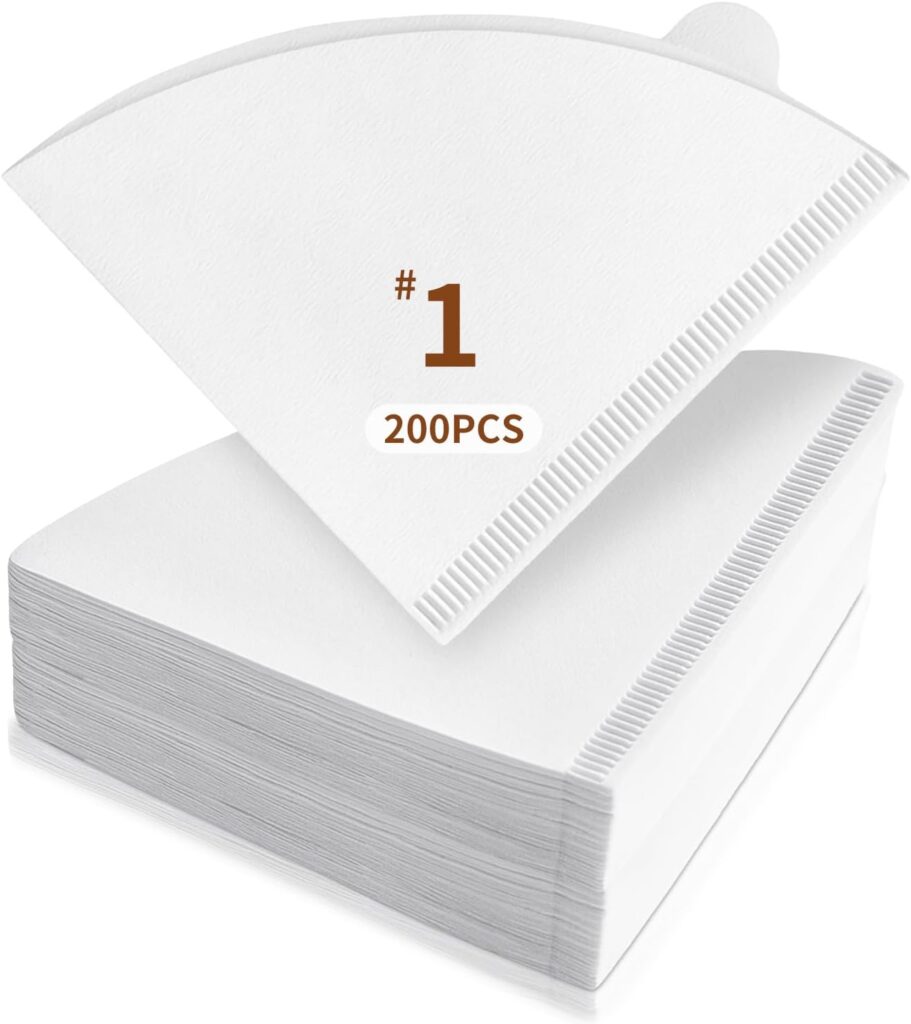
White Hario Filters V60 are treated with an oxygen-bleaching process that removes the natural papery taste often associated with unbleached filters.
Many specialty coffee professionals prefer white filters because they produce a flavor-neutral brew — you taste the coffee, not the paper.
If you are brewing high-end single-origin beans and want the purest expression of their flavor notes, white filters are typically the go-to choice.
Unbleached (Natural Brown) Filters
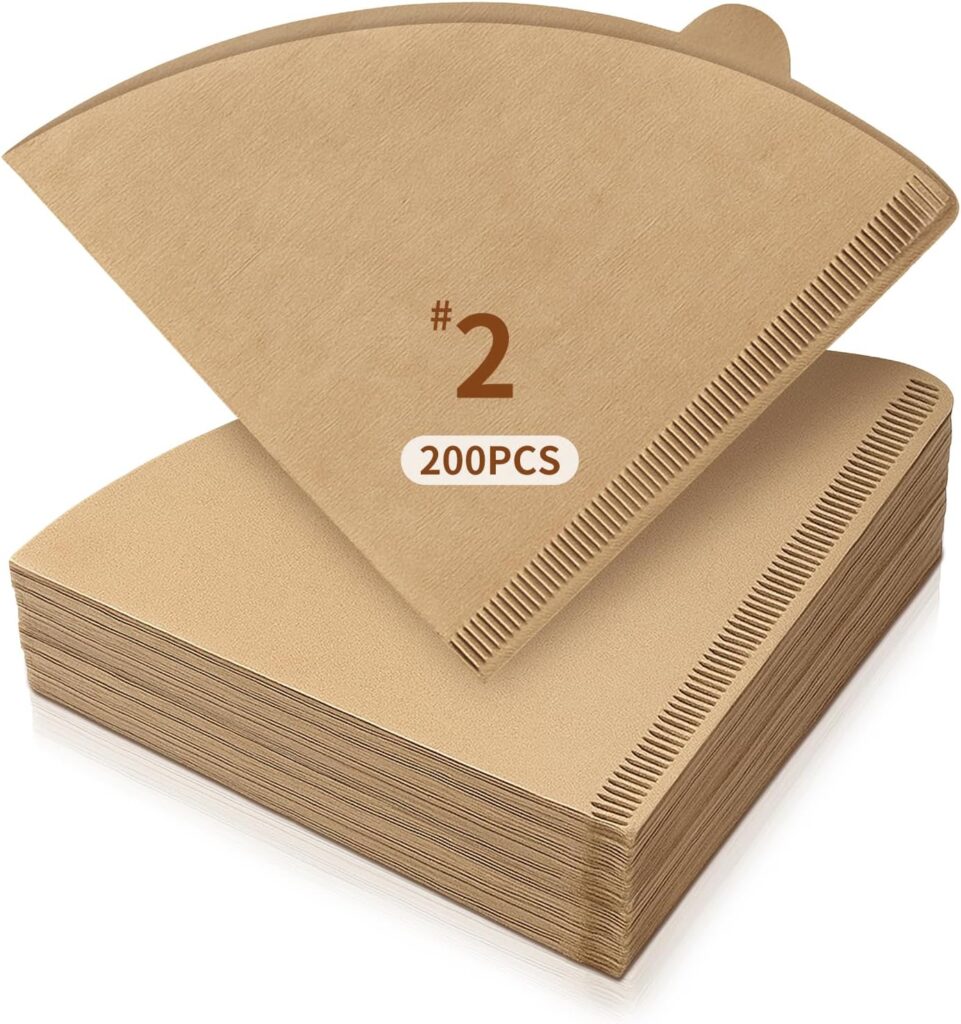
Natural brown Hario filters skip the bleaching process entirely, making them a popular choice among eco-conscious brewers. They are biodegradable and require less chemical processing. The trade-off is a slight papery note if the filter is not properly rinsed before brewing.
However, with a thorough pre-rinse (more on this below), this difference becomes nearly imperceptible in the final cup.
The bottom line? Both work beautifully. The choice comes down to your personal values and how diligent you are with the rinsing step.
Why the Filter Design Matters So Much
The genius of the Hario V60 dripper filters lies in how they interact with the dripper itself. The V60 features a 60-degree cone angle (hence the “V60” name), spiral ribbing along the interior walls, and a single large drainage opening at the base.
The paper filter sits flush against these ribs, which creates air pockets between the filter and the cone wall. This is critical: those air pockets allow water to drain freely and evenly down through the entire bed of coffee grounds, rather than pooling at the sides.
This design gives the brewer an extraordinary level of control. Pour slowly, and you slow the extraction; pour faster, and you speed it up.
The filter accommodates this full range of variables without choking the flow or becoming oversaturated — something you simply cannot achieve with other filter types in other brewers. This is precisely why Hario V60 filters have become the standard tool of competition baristas around the world.
How to Use Hario V60 Dripper Filters: A Step-by-Step Brewing Guide
Using Hario filters V60 correctly is an art form — but once you understand the fundamentals, it becomes second nature. Here is a complete walkthrough of the brewing process.
What You Will Need
• Hario V60 dripper (Size 01, 02, or 03)
Hario V60 dripper filters (matching size)
• Freshly ground coffee (medium-fine grind)
• Hot water (between 195°F and 205°F / 90°C–96°C)
• Gooseneck kettle (strongly recommended for controlled pouring)
• Digital scale and timer
• Cup or carafe to brew into
Step 1 – Open and Place the Filter
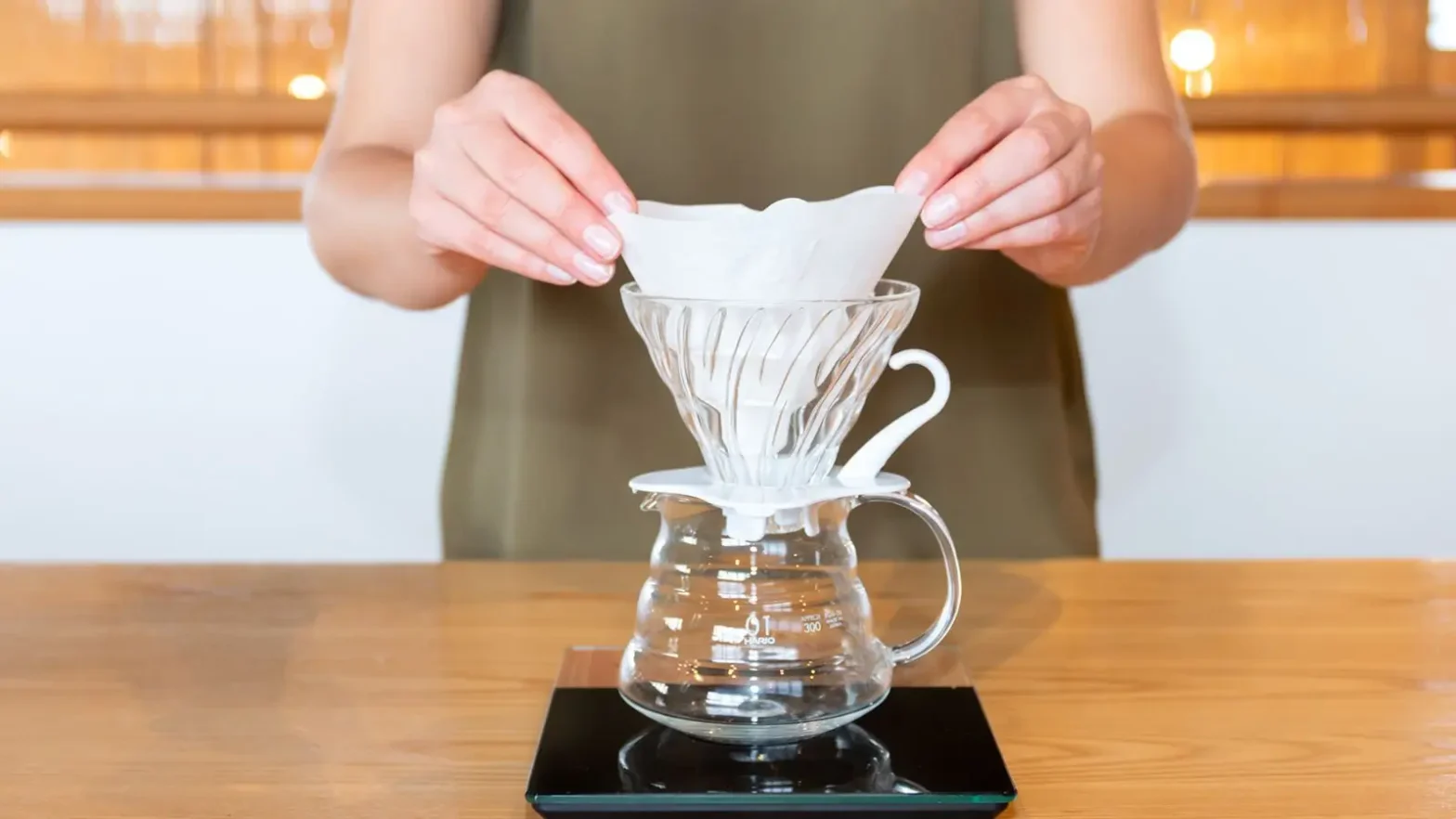
Remove one Hario V60 filter from the pack. Fold the crimped seam on the side and bottom to create a sturdy cone shape that will hold its form inside the dripper. Place the cone into the V60 and set the dripper over your cup or carafe.
Step 2 – Rinse the Filter
This step is non-negotiable if you want a clean, pure cup. Pour hot water slowly and evenly through the dry filter, saturating it completely. This serves two purposes:
- It eliminates any residual papery taste from the filter material
- It pre-heats your dripper and cup, which helps maintain a consistent brewing temperature from start to finish. Once rinsed, discard the water in the cup.
Step 3 – Add Your Coffee
Add your freshly ground coffee into the rinsed filter. The standard ratio is approximately 1 gram of coffee per 16–18 grams of water.
For a single cup (around 250ml / 8.5 oz), start with 16–18 grams of coffee. Gently shake the dripper to level the grounds — a flat, even bed ensures uniform water contact and extraction.
Step 4 – The Bloom Pour
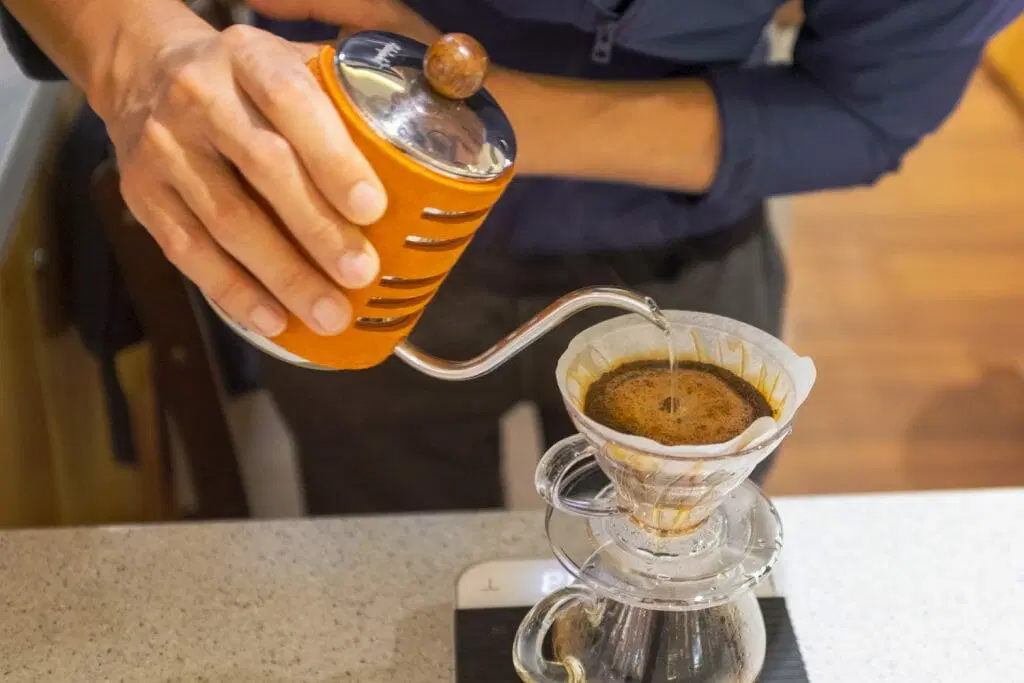
Start your timer and begin with the bloom pour: use roughly twice the weight of your coffee in water (so 30–34ml for 16–18g of coffee) and pour it slowly and evenly over the grounds in a gentle circular motion, starting from the center and working outward.
You will see the coffee puff up and release CO₂ gas in a process called degassing. This is a sign of fresh coffee and indicates the grounds are becoming properly saturated. Let the bloom sit for 35–50 seconds.
Step 5 – Continue Pouring
After the bloom, continue pouring in slow, steady, concentric circles. Avoid pouring directly down the center or around the edges of the filter, as this can agitate the grounds unevenly or cause water to bypass the coffee bed entirely.
Pour in stages — adding water every 20–30 seconds — until you reach your target total water weight (250-280ml).
A typical single-cup brew should be complete within 2.5 to 3.5 minutes total.
Step 6 – Remove the Filter and Enjoy
Once the water has fully drained through — indicated by the bed of grounds forming a flat, even surface — your brew is complete.
Lift the dripper away, compost your used Hario filters V60 along with the spent grounds (both are compostable), and enjoy your cup immediately for the freshest flavor experience.
Pro Tips for Getting the Most Out of Your Hario Filters
Always use fresh coffee. The V60 and its filters are capable of revealing extraordinary detail in a coffee’s flavor profile — but that only works if the coffee itself is fresh. Aim to use beans within two to four weeks of their roast date.
Invest in a gooseneck kettle. The thin, curved spout of a gooseneck kettle allows precise, controlled water flow — something that makes a dramatic difference when working with Hario V60 dripper filters.
Standard kettles pour too fast and too heavily to maintain the gentle, even pours the V60 demands.
Dial in your grind size. If your brew finishes too quickly (under 2 minutes), grind finer. If it takes too long (over 4 minutes), grind coarser. The grind is your primary dial for controlling extraction speed with Hario filters.
Keep your filters dry and sealed. Store unused Hario V60 filters in a cool, dry place away from strong odors. Paper is highly absorbent and can pick up ambient scents (like spices, cleaning products, or other foods) if left open in a drawer.
A sealed bag or airtight container keeps them fresh and flavor-neutral.
Use filtered or spring water. Water quality has an enormous impact on the final cup. Heavily chlorinated tap water can introduce off-flavors that even the best filters cannot fully compensate for.
When possible, use filtered or spring water with a balanced mineral content.
Compare:
- Best Liquid Descaler for Coffee Machines
- Top 5 Best Miele Descaling Tablets for Coffee Machines
- The Best Descaling Powder for Any Coffee Machine
- Coffee Shop Equipment: What Each Tool Does and Why it Matters
Frequently Asked Questions
Can you use Melitta filters in a Hario V60?
This is one of the most frequently asked questions among pour-over coffee beginners, and the short answer is: technically yes, but it is not recommended. Melitta filters are designed for a different dripper geometry — specifically, a flat-bottomed, single-hole design — and they do not sit properly inside the V60’s cone. When forced into the V60, Melitta filters tend to collapse or seal against the cone walls, blocking the spiral ribbing that allows air to escape. This restricts water flow significantly, resulting in a much slower and often over-extracted, bitter brew. Hario filters V60 are specifically engineered to match the 60-degree cone angle, and using the correct filter makes a genuine, noticeable difference in brew quality. If you are in a pinch, Melitta filters can work in an emergency — but for consistent, excellent results, always use Hario V60 filters.
Are Hario V60 Filters Compostable?
Yes — both bleached and unbleached Hario filters are made from paper and are fully compostable. In fact, you can compost the entire used filter along with your spent coffee grounds, making the V60 one of the more environmentally friendly brewing methods available. The combination of paper and coffee grounds is an excellent addition to any home compost bin, breaking down quickly and enriching the soil with nitrogen from the coffee.
What Is the Correct Hario V60 Filter Size for My Dripper?
Matching filter size to your dripper is essential. Hario V60 dripper filters come in three main sizes: Size 01 fits the V60-01 dripper (suitable for 1–2 cups), Size 02 fits the V60-02 dripper (the most widely used size, suitable for 1–4 cups), and Size 03 fits the V60-03 dripper (suitable for larger batch brewing up to 6 cups). Using the wrong size filter can result in improper seating, poor sealing, or overflow — all of which ruin an otherwise good brew. Check the bottom of your V60 dripper or its original packaging for the size number.
How Many Times Can You Use a Hario V60 Filter?
Hario V60 paper filters are designed for single use only. Reusing a filter is not recommended: the paper becomes weakened and may tear, coffee oils and residue trapped in the paper from the previous brew can introduce stale, rancid flavors into your fresh cup, and the structural integrity of the filter is compromised, which alters flow rate and extraction. For the best results — and to protect the flavor of your coffee — always use a fresh Hario V60 filter for every brew. Given that a pack of 100 filters is very affordable, there is little reason to compromise on this.
Do Hario V60 Filters Affect the Taste of Coffee?
Yes, but in largely positive ways — when used correctly. Hario V60 filters are designed to capture fine coffee grounds and most of the oils that contribute to a murkier, heavier body (as you might find in a French press or AeroPress without a paper filter). The result is a noticeably cleaner, brighter cup that allows subtle flavor notes — fruit, florals, sweetness, acidity — to shine through with exceptional clarity. The only potential downside is a faint papery taste if the filter is not pre-rinsed, which is why the rinse step is so critical. Done correctly, Hario filters V60 are virtually tasteless, acting purely as a precision tool for clean extraction.
Final Thoughts
Few tools in the world of specialty coffee have earned as much respect as the Hario V60 — and at the heart of every great cup brewed in one is the humble Hario V60 filter.
Precision-crafted, thoughtfully designed, and easy to use once you know the steps, these filters are a testament to the idea that the simplest tools, done right, can produce extraordinary results.
Whether you are setting up your first home pour-over station or refining the technique behind your café’s morning service, mastering your Hario filters is one of the most impactful investments you can make in your daily coffee ritual.
Start with quality beans, use filtered water, always pre-rinse, and take your time with each pour. The reward is a cup of coffee that is not just satisfying — it is genuinely memorable.
At CoffeNZO.com, we believe that great coffee begins with great tools and great knowledge. Explore our growing collection of specialty coffee resources, brewing guides, and curated products to elevate your craft — one cup at a time.
Related posts:
Ristretto vs Espresso vs Lungo: A Senior Barista's Guide to the Holy Trinity of Coffee
Monday January 12, 2026Black Coffee vs Americano: Understanding the Real Difference
Saturday January 31, 2026Coffee to Water Ratio: The Secret to Brewing a Perfect Cup
Sunday May 17, 202625 Best Coffee Roasters in America
Thursday February 19, 2026Espresso Machine vs Coffee Maker: Which Should You Buy?
Monday February 2, 2026Organic Cold Brew Coffee: Why It's Better and How to Make It at Home
Saturday June 27, 2026How to Bloom Coffee for Pour-Over, French Press, and Drip Brewing
Thursday January 22, 2026What is Specialty Coffee? Know Why It's the World's Premium Coffee
Saturday February 14, 2026Cortado vs Cappuccino: What's the Real Difference?
Thursday March 19, 2026
Hi,
I’m Wycléf NY, a certified barista with 6 years of experience (as of December 2025).
I started this website to share my coffee preparation insights with aspiring coffee enthusiasts and interact with fellow baristas.
Let’s catch up over a cup of iced Coffénzo coffee or shoot me a quick short message text (sms) at ny@coffenzo.com