
The honest answer to how much caffeine in decaf coffee might surprise you. Decaf is not caffeine-free. Here’s exactly what’s in your cup.
How Much Caffeine is in Decaf Coffee?
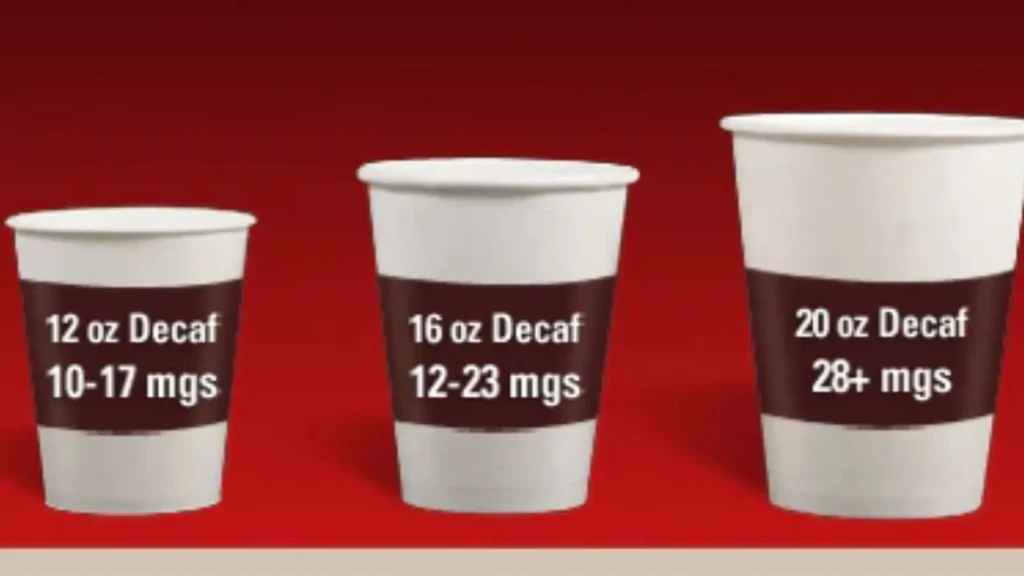
So, how much caffeine in decaf coffee? First of, decaf coffee is not caffeine-free. No decaffeination process can remove every last molecule of caffeine. A trace amount always stays behind.
According to the USDA, an 8 oz cup of decaf contains roughly 2–15 mg of caffeine, compared to about 95 mg in a regular cup. That’s about 2–5% of what you’d get from fully caffeinated coffee.
Quick comparison: A cup of decaf has less caffeine than a square of dark chocolate — and far less than a can of Coca-Cola.
So, how much caffeine does decaf coffee have in practice? It depends on three things: the bean species, the decaffeination method, and how you brew it. More on each below.
Suggested reads:
Caffeine Comparison at a Glance
| Coffee Type | Serving Size | Caffeine | Notes |
| Regular drip coffee | 8 oz | 95–165 mg | High caffeine |
| Espresso | 1 oz shot | 63–75 mg | High caffeine |
| Decaf coffee | 8 oz | 2–15 mg | Low caffeine |
| Decaf espresso shot | 1 oz | 3–15 mg | Low caffeine |
| Decaf cold brew | 8 oz | 3–15 mg | Low caffeine |
How Do You Make Decaf Coffee?
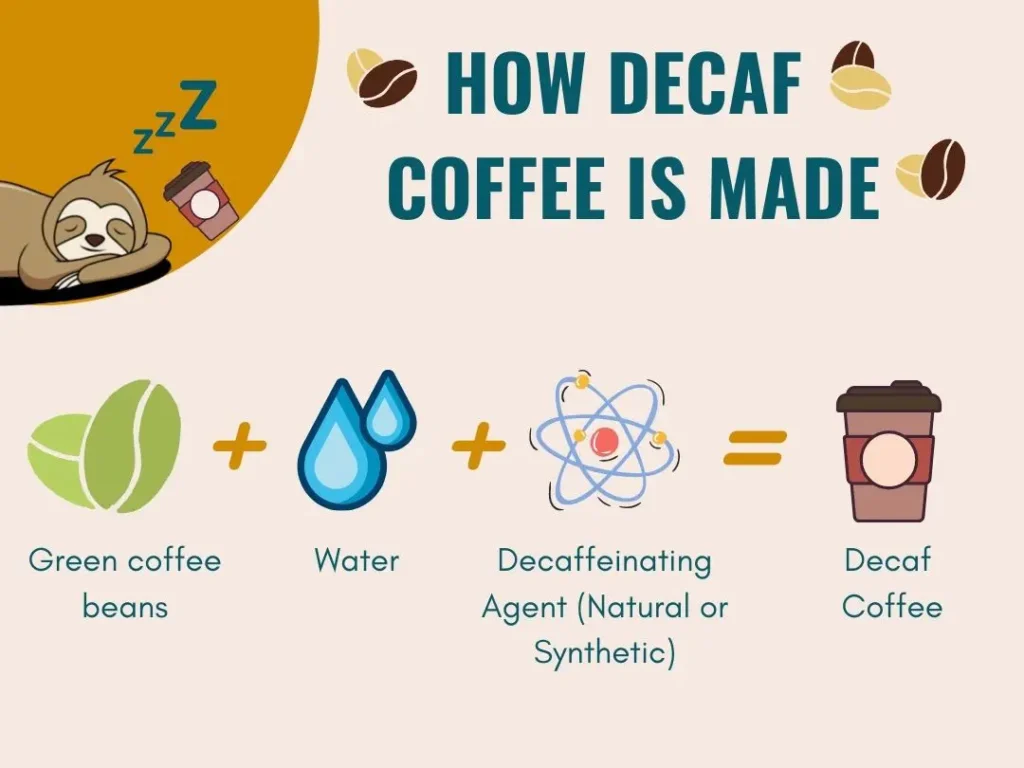
All coffee starts as green, unroasted beans. To make decaf, those beans are soaked or steamed to open their pores, allowing caffeine to be drawn out before roasting. The flavor compounds stay. The caffeine goes.
There are three main methods used today:
1. Swiss Water Process
100% chemical-free. Uses a specially treated water solution to dissolve and filter away caffeine. Removes up to 99.9% of caffeine. Best for purity and organic certification. Look for the Swiss Water® logo on the label.
2. CO₂ Process
Pressurized liquid carbon dioxide selectively binds to caffeine molecules without touching flavor compounds. Highly effective. Common in specialty and premium coffee. Excellent flavor retention.
3. Solvent-Based Process
Uses methylene chloride or ethyl acetate to extract caffeine from steamed beans. The solvents evaporate entirely during the drying process and are considered safe by the FDA. This is the most widely used commercial method.
Each method must remove at least 97% of caffeine by US law. Swiss Water and CO₂ processes typically achieve the lowest residual caffeine. If you want the cleanest cup, look for Swiss Water Process on the label.
What Affects Caffeine in Decaf Coffee?
Even within the decaf category, caffeine in decaf coffee varies quite a bit from cup to cup. Here’s why:
- Bean type: Robusta beans naturally carry more caffeine than Arabica. A Robusta-based decaf will always have higher residual caffeine.
- Decaf method: Swiss Water Process reaches 99.9% removal. Solvent methods typically hit 97–99%. That gap adds up over multiple cups.
- Brew strength: More grounds, longer contact time, and finer grind all pull more caffeine from the beans — even decaf ones.
- Brew method: Cold brew’s long steep pulls out slightly more caffeine. Standard drip extracts less.
- Brand matters: Starbucks decaf, for example, has been measured at 15–25 mg per serving due to larger portion sizes.
Sensitive to caffeine? Stick to Swiss Water Process Arabica beans brewed with a standard drip or pour-over method. That combination gives you the lowest possible caffeine per cup.
Decaf Coffee Benefits
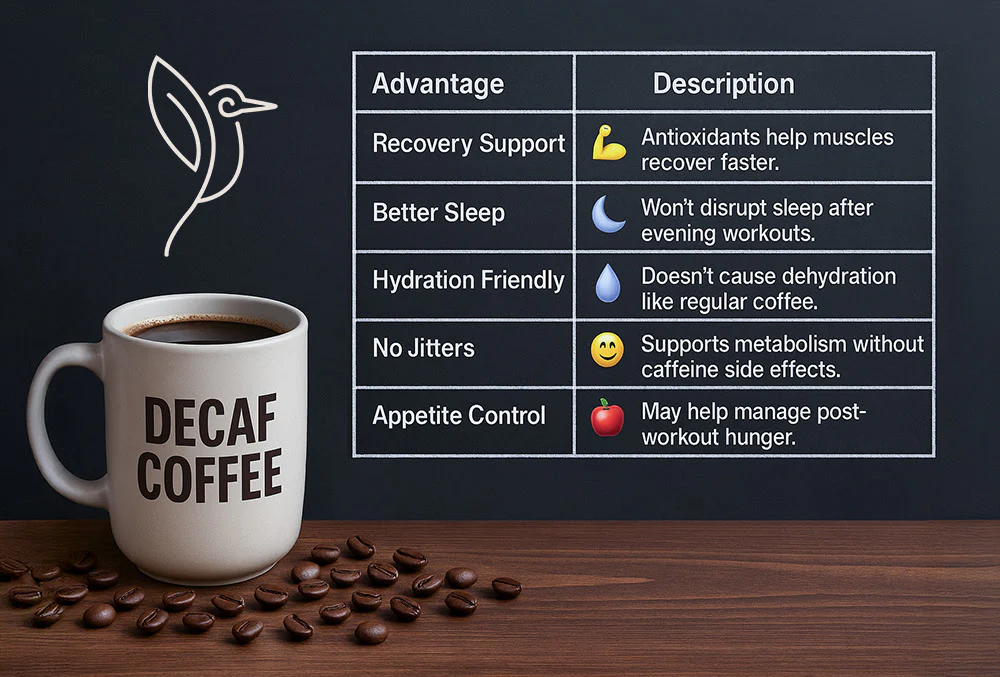
Here’s what many people miss: removing caffeine doesn’t strip away what makes coffee good for you. The antioxidants, polyphenols, and chlorogenic acids all remain.
The decaf coffee benefits are surprisingly robust. Research consistently shows:
- Rich in antioxidants. Decaf retains the hydrocinnamic acids and polyphenols found in regular coffee. These neutralize free radicals and reduce oxidative damage.
- Heart health support. Studies show decaf may help lower blood pressure and reduce cardiovascular stress — without caffeine’s side effects on heart rate.
- Lower type 2 diabetes risk. Chlorogenic acids in decaf support better blood sugar regulation and improved insulin sensitivity.
- Better sleep, less anxiety. You get the ritual and the taste without the stimulation. Ideal for afternoon or evening drinking.
- Gentler on the gut. Decaf is less acidic than regular coffee, making it easier on the stomach for people with GERD or acid reflux.
- Longevity link. A large UK Biobank study found that drinking 3 cups of decaf per day was associated with a 12% reduction in overall mortality.
Harvard’s School of Public Health said it plainly: “Most of the metabolic effects of coffee are probably not related to caffeine.” The good stuff in your cup is still there in decaf.
Compare: How Much Caffeine in 3 Shots of Espresso?
How Much Caffeine in Decaf Coffee FAQs
Is decaf coffee completely caffeine-free?
No. Decaf coffee always contains a small amount of caffeine. US regulations require at least 97% of caffeine to be removed, but trace amounts — typically 2 to 15 mg per 8 oz cup — remain. The exact level depends on the bean type, decaffeination method, and how the coffee is brewed.
Can decaf coffee keep you awake at night?
For most people, the 2–15 mg of caffeine in decaf is too small to disrupt sleep. By comparison, regular coffee contains around 95 mg. However, if you are highly sensitive to caffeine, even small amounts may affect you. If sleep is a concern, choose a Swiss Water Process decaf — it removes up to 99.9% of caffeine.
Is decaf coffee bad for you?
No — in fact, decaf coffee is considered generally healthy. It retains most of the antioxidants and beneficial compounds found in regular coffee. Research links decaf consumption to reduced risk of type 2 diabetes, improved heart health, and lower overall mortality. The main trade-off is a slightly reduced antioxidant level — roughly 10–15% less than regular coffee.
How much decaf coffee is safe to drink per day?
Most adults can safely enjoy multiple cups of decaf per day without issue. Since 97% of the caffeine is removed, even 5–10 cups of decaf would give you roughly the same caffeine as just 1–2 cups of regular coffee. Many studies showing coffee’s health benefits are based on 2–3 cups per day, whether caffeinated or decaf.
Hi,
I’m Wycléf NY, a certified barista with 6 years of experience (as of December 2025).
I started this website to share my coffee preparation insights with aspiring coffee enthusiasts and interact with fellow baristas.
Let’s catch up over a cup of iced Coffénzo coffee or shoot me a quick short message text (sms) at ny@coffenzo.com