

Knowing exactly how much coffee grounds per cup of water is the single most important skill any coffee lover can master — and at CoffeNZO, we believe everyone deserves a flawless cup, every single time.
Whether you are brewing for yourself at home, hosting guests, or sourcing premium beans for your favorite coffee shop, understanding the right ratio transforms an ordinary mug into something extraordinary.
This guide walks you through everything you need to know, from tablespoon shortcuts to gram-precise measurements, for every brewing style.
Coffee is mostly water — roughly 98 to 99 percent — so what you add, and how much, defines the flavor in your cup.
Too little coffee creates a flat, watery brew lacking in depth and aroma. Too much coffee pulls out bitter, harsh compounds that overwhelm the palate.
The goal is balance: a coffee to water ratio that extracts the sweetness, acidity, and body of your beans without tipping into bitterness or weakness.
The good news is that there is no mystery here. Science, specialty coffee organizations, and decades of barista wisdom have converged on clear guidelines. Once you learn them, great coffee becomes repeatable, predictable, and deeply satisfying.
Related: How Many Scoops of Coffee Per Cup?
The Golden Ratio: Your Starting Point
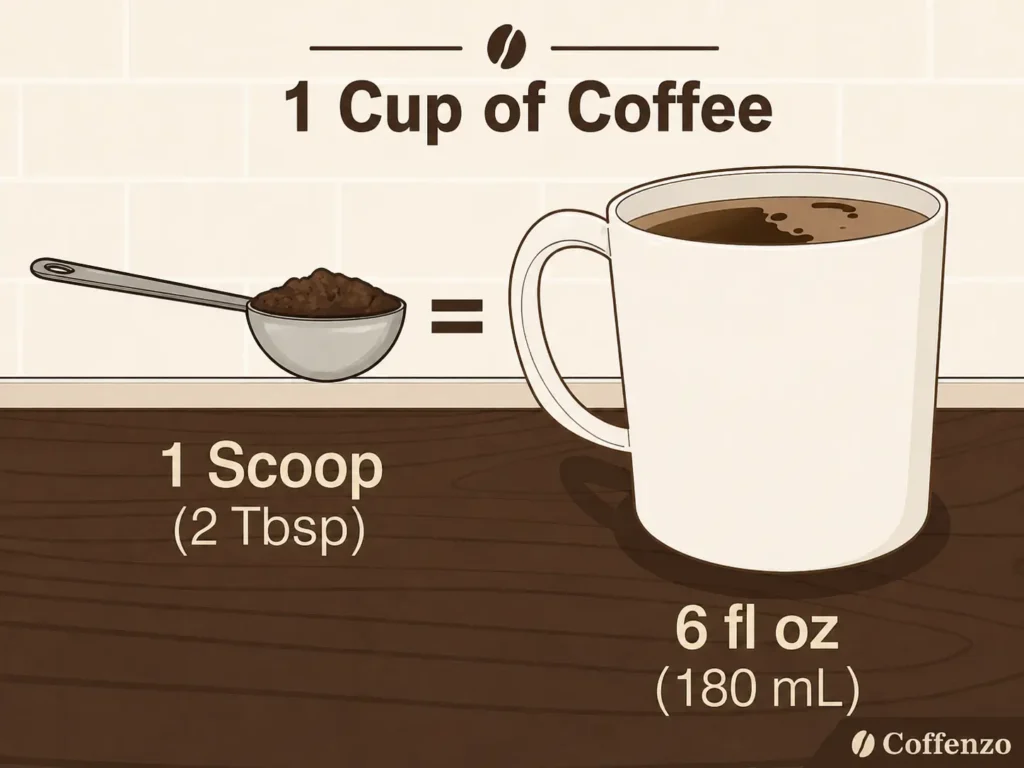
The term “Golden Ratio” refers to the coffee-to-water proportion recognized by the Specialty Coffee Association (SCA) as the benchmark for a well-balanced brew.
The SCA recommends approximately 55 grams of coffee per liter of water, which works out to roughly a 1:18 ratio — one gram of coffee for every 18 grams of water. This is the standard used to judge coffee quality in professional settings around the world.
In practical, everyday terms, this translates to about 1 to 2 tablespoons of ground coffee per 6-ounce cup of water.
If you prefer measuring by weight for consistency — which professionals highly recommend — aim for 10 grams of coffee per 180 ml (6 oz) of water as your baseline.
From there, personal taste and brewing method guide your adjustments.
It is worth noting that “a cup” is not always a standard measurement. Many drip coffee makers define a cup as 4 to 6 ounces, while the mug on your kitchen counter likely holds 10 to 16 ounces.
Always check your coffee maker’s volume markings before calculating your grounds. A mismatch here is one of the most common causes of disappointing home-brewed coffee.
Ratio by Brew Method: Tailoring Your Grind
Different brewing methods extract coffee in different ways — through pressure, gravity, immersion, or cold steeping. Each technique has its own ideal coffee-to-water ratio and grind size.
Using the wrong combination leads to under-extraction (sour, thin coffee) or over-extraction (bitter, harsh coffee). Here is a breakdown of the most popular methods.
Drip Coffee Maker
Use a 1:15 to 1:17 ratio for a standard, well-balanced cup. This translates to roughly 2 tablespoons (about 10 grams) of medium-ground coffee per 6-ounce cup.
Drip machines automate the pour, so consistency in measuring your grounds is especially important. A 1:16 ratio is the sweet spot most home brewers enjoy.
Pour-Over (V60, Chemex, Kalita)
Pour-over methods highlight clarity and brightness, making them ideal for single-origin, light-roast coffees.
Start with a 1:16 ratio and adjust toward 1:17 if you want to amplify delicate floral or fruity notes. Use a medium-fine grind and pour slowly in circular motions over about 3 to 3.5 minutes for best results.
French Press
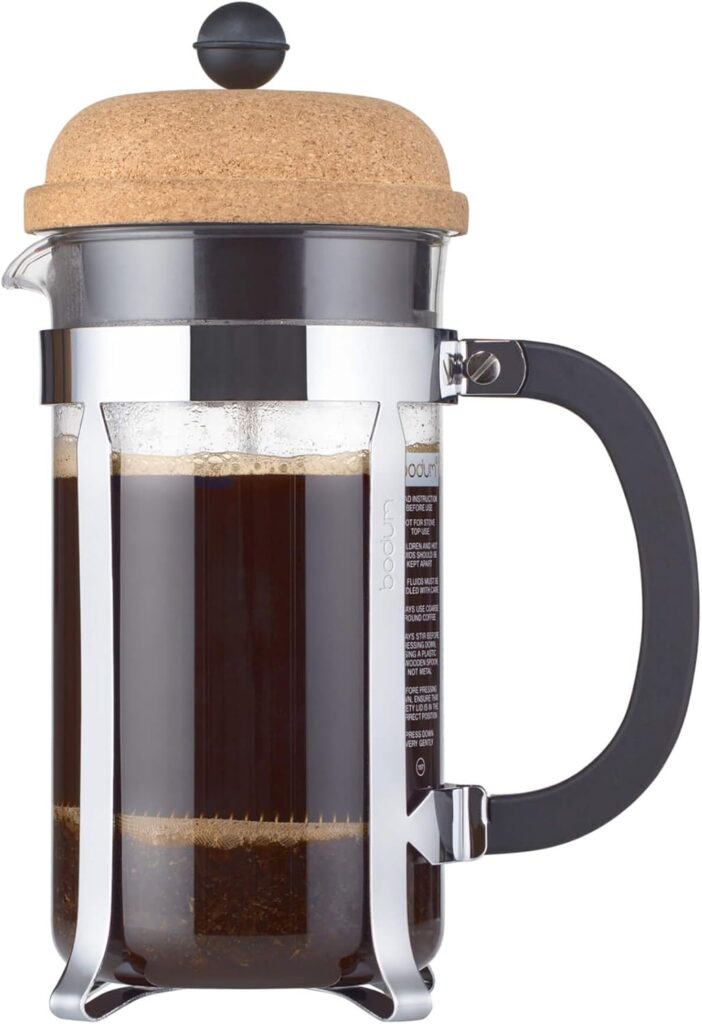
The French press is a full-immersion method, meaning the grounds steep in water for 4 to 5 minutes. Use a coarser grind and a 1:12 to 1:15 ratio for a rich, full-bodied cup.
For a standard 34-ounce French press, that equals about 8 tablespoons (56 grams) of coffee. The heavier ratio compensates for the longer contact time.
Espresso
Espresso uses high pressure and a very fine grind. The standard ratio is 1:2 — approximately 18 to 20 grams of coffee grounds yielding 36 to 40 grams of liquid espresso in 25 to 30 seconds.
This concentration forms the base of lattes, cappuccinos, and macchiatos. Precision here is non-negotiable.
Refer: How to Make an Espresso Shot
Cold Brew Concentrate
Cold brew steeps coarse grounds in cold or room-temperature water for 12 to 24 hours, producing a smooth, low-acid concentrate.
Use a 1:4 to 1:5 ratio for concentrate (dilute before drinking), or a 1:8 to 1:15 ratio for a ready-to-drink batch. Coarse grounds are essential — fine grinds over-extract and produce bitterness in cold brew.
Compare: What is Cold Brew Coffee Concentrate?
Quick Reference Chart
| Brew Method | Ratio (Coffee:Water) | Grounds per 6 oz Cup | Grind Size |
| Drip Coffee | 1:15 – 1:17 | ~2 tbsp (10g) | Medium |
| Pour-Over | 1:16 – 1:17 | ~2 tbsp (10g) | Medium-Fine |
| French Press | 1:12 – 1:15 | ~2–3 tbsp (14g) | Coarse |
| Espresso | 1:2 | 18–20g per shot | Extra Fine |
| Cold Brew | 1:4 – 1:8 | Varies by batch | Extra Coarse |
| AeroPress | 1:12 – 1:15 | ~2 tbsp (10–14g) | Fine–Medium |
Why Weight Beats Volume Every Time
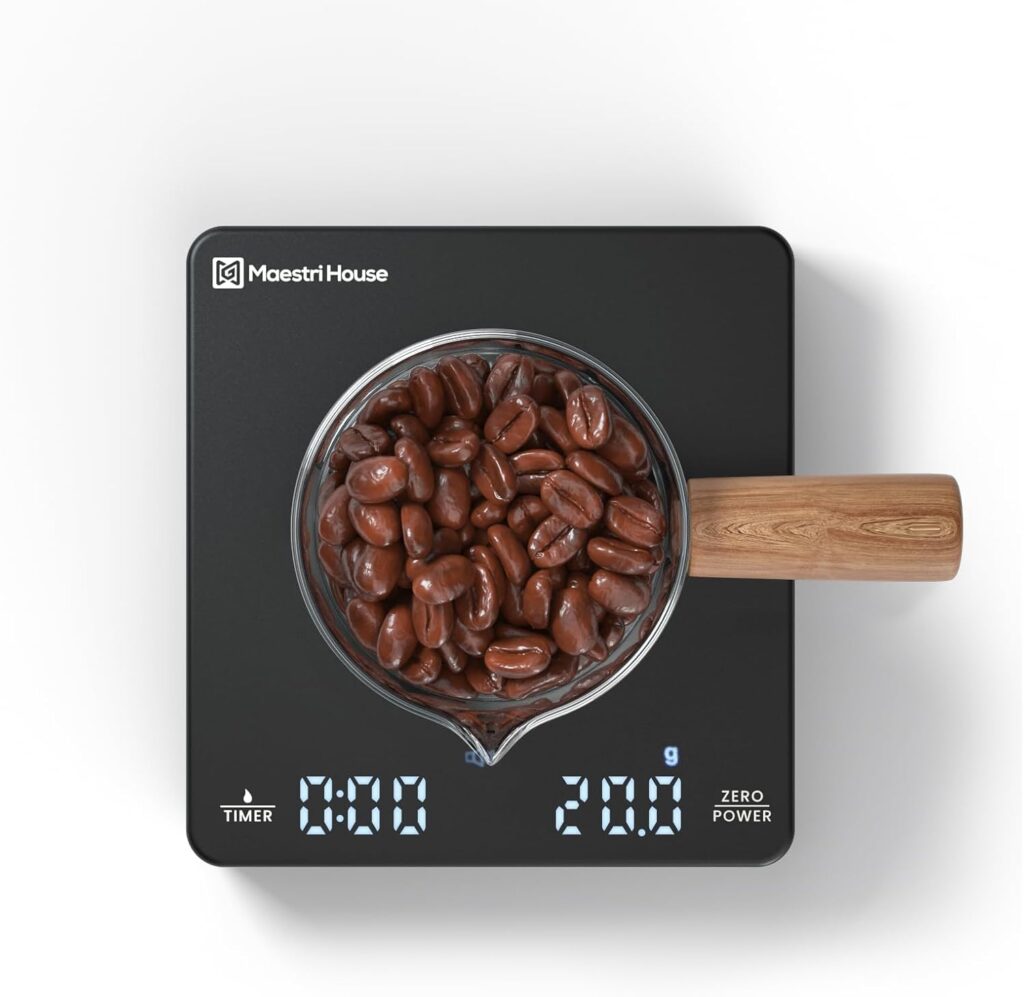
Coffee professionals universally recommend measuring by weight rather than volume — and for good reason.
A tablespoon of finely ground dark roast coffee weighs significantly less than a tablespoon of coarsely ground light roast. Because darker roasts are less dense, they take up more space per gram.
Volume measurements, therefore, introduce an inconsistency that undermines your ratio.
A basic kitchen scale costs as little as $15 and pays for itself in better-tasting coffee immediately. Weigh your water and your grounds in grams, apply your target ratio, and you will get a consistent result every single time — regardless of roast level, grind size, or bag freshness.
If you are not ready to invest in a scale, a reliable shortcut is two level tablespoons of pre-ground coffee per 6-ounce cup of water. This approximates a 1:16 ratio for medium-roast, medium-ground coffee.
As you move to darker roasts or coarser grinds, the edge slopes slightly upward. As you move to lighter, denser beans, stay closer to the standard.
How Grind Size Affects Your Ratio
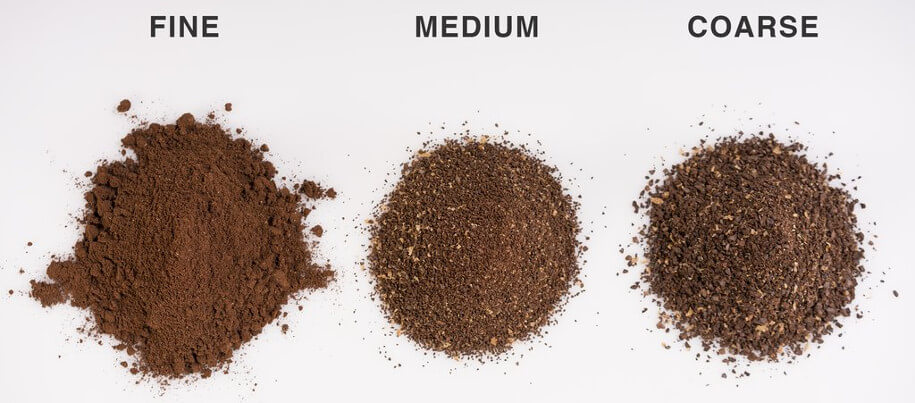
Grind size is the silent partner to your coffee-to-water ratio. It determines the surface area of the grounds exposed to water, which directly controls how quickly flavors are extracted.
A finer grind extracts faster; a coarser grind extracts more slowly. Mismatching grind size to your brewing method throws off the balance, even when your ratio is perfect.
For espresso, an extra-fine grind — the consistency of fine table salt — is tamped into the portafilter to resist high-pressure water.
For cold brew, an extra-coarse grind resembling raw sugar or kosher salt allows water to slowly seep through during a long steep without pulling bitter compounds. Drip and pour-over fall in the medium range.
Always use a burr grinder rather than a blade grinder. Blade grinders produce wildly uneven particles, causing simultaneous over-extraction and under-extraction in the same cup.
A quality burr grinder — even an affordable manual one — produces uniform particles that extract evenly, making every other variable far more predictable.
Water Temperature and Quality Matter Too
The ratio of grounds to water sets the foundation, but water temperature seals the deal. The optimal brewing temperature is between 195°F and 205°F (90°C to 96°C).
Water below this range under-extracts the coffee, producing a sour, flat brew. Water above this range over-extracts, pulling unpleasant bitter compounds from the grounds.
A practical tip: boil your kettle, then let it rest for 30 to 60 seconds before pouring. This naturally brings the water into the ideal temperature window without needing a thermometer.
For darker roasts, a slightly cooler pour — around 195°F — prevents excess bitterness. Lighter roasts benefit from the hotter end, around 205°F, to ensure full extraction.
Water quality matters just as much as temperature. Since water makes up 98 to 99 percent of your final cup, impurities, chlorine, and off-flavors in tap water transfer directly into your brew.
Filtered water produces the cleanest, most accurate representation of your coffee’s character.
Adjusting Strength to Your Preference
The Golden Ratio is a starting point, not a rule. Coffee preference is deeply personal, and the right ratio for you may be stronger or lighter than the standard. The beauty of understanding the ratio is that adjustments become intentional rather than accidental.
For a stronger, bolder cup, decrease the ratio toward 1:13 or 1:15. For a lighter, more delicate brew, increase it toward 1:18 or 1:20.
Change only one variable at a time — grounds weight, water amount, or grind size — so you can identify exactly what created the result you taste. This systematic approach is how professionals dial in perfect recipes.
Keep a simple brewing journal. Note your ratio, grind size, water temperature, and brew time next to each tasting note.
Over a few weeks, you will identify your personal ideal with precision — and be able to recreate it every morning without guesswork. Good coffee at home is a skill, and like any skill, it improves with mindful repetition.
Common Mistakes and How to Fix Them
Here some of the common mistakes many people make when trying to balance how much coffee grounds per cup of water they will use and how to solve them:
Weak, Watery Coffee
You are either using too few grounds, too much water, or a grind that is too coarse. Try increasing your grounds by 1 tablespoon per 6 ounces, or tightening your grind size by 1 step. Taste the result before making further adjustments.
Bitter, Harsh Coffee
Bitterness usually signals over-extraction. Your grind may be too fine for your brew method, your water too hot, or your contact time too long. Try coarsening your grind, lowering the water temperature slightly, or reducing steep time.
Inconsistent Results Day to Day
If your coffee tastes different each morning despite using the same recipe, the culprit is usually inconsistent measurement. Switch from scoops to weight — a scale eliminates the variability that spoons introduce across different roasts and grind levels.
Flat, Stale Flavor
Stale coffee grounds are a common issue. Coffee oxidizes quickly after grinding, losing aromatics and flavor within hours. Buy whole beans, store them in an airtight container away from light and heat, and grind only what you need immediately before brewing.
Continue Brewing Better Coffee
So what now? Have you understood how much coffee grounds per cup of water?
Whether you are a first-time home brewer learning your ratios or a seasoned enthusiast dialing in your espresso, the principles in this guide apply at every level.
Start with the Golden Ratio — 1 to 2 tablespoons of high-quality grounds per 6 ounces of hot, filtered water — then explore, adjust, and personalize. The perfect cup is always a few measurements away.
Related posts:
Hario V60 Dripper Filters: What They Are and How to Use Them Properly
Saturday March 21, 2026Cortado vs Cappuccino vs Latte: Which Espresso Drink is Right for You?
Sunday March 22, 2026How Many Scoops of Coffee Per Cup? The Perfect Coffee to Water Ratio
Wednesday May 13, 2026How to Remove Old Coffee Stains from Carpet: A Step-by-Step Guide That Actually Works
Wednesday April 29, 2026How to Make Coffee Less Bitter: 10 Simple Tricks That Actually Work
Friday February 20, 2026Cold Brew Coffee Concentrate: What it Is and How to Make It
Thursday January 8, 2026Macchiato vs Cortado: Which Bold Little Espresso Drink Actually Wins?
Tuesday March 17, 2026What is the Best Coffee for Beginners?
Saturday May 9, 2026How to Make the Best Coffee in a Percolator
Tuesday January 20, 2026
Hi,
I’m Wycléf NY, a certified barista with 6 years of experience (as of December 2025).
I started this website to share my coffee preparation insights with aspiring coffee enthusiasts and interact with fellow baristas.
Let’s catch up over a cup of iced Coffénzo coffee or shoot me a quick short message text (sms) at ny@coffenzo.com